

Integrated vs. Split-Type Variable Frequency Air Compressor: Market Competition Amidst Technological Innovation
In the global wave of industrial transformation towards green and intelligent manufacturing, China's air compressor industry is undergoing unprecedented changes. As the "heart" of industrial equipment, the energy efficiency and operational stability of air compressors directly impact a company's production costs and product quality. With the deepening implementation of "dual-carbon" goals, energy conservation and emission reduction have become rigid constraints for industry development, and variable frequency technology, with its advantages of dynamic adjustment and precise air supply, has become the core direction for upgrading screw air compressor. However, behind the booming market for inverter screw air compressor, integrated and split-type structural designs are fiercely competing—the former excelling in integration and high efficiency, while the latter occupying a niche market with its modularity and flexibility. This technological battle not only concerns equipment performance and cost but also reflects a deep-seated competition among industrial equipment regarding space efficiency, operational efficiency, and full life-cycle management.
Technical Principle: Energy-Saving Logic of Homogeneous but Heterogeneous Structures
The core of variable frequency air compressor lies in using a frequency converter to adjust the motor speed, achieving precise control of pressure, flow, and temperature. Its energy-saving principle is based on the "linear relationship between speed and power"—reducing motor speed reduces actual energy consumption. When the system's air consumption decreases, the inverter reduces motor speed, decreasing compressed air output; conversely, it increases speed to meet demand. This mechanism eliminates the energy waste caused by frequent loading and unloading of traditional air compressors, achieving a comprehensive energy saving rate of 20%-40%.
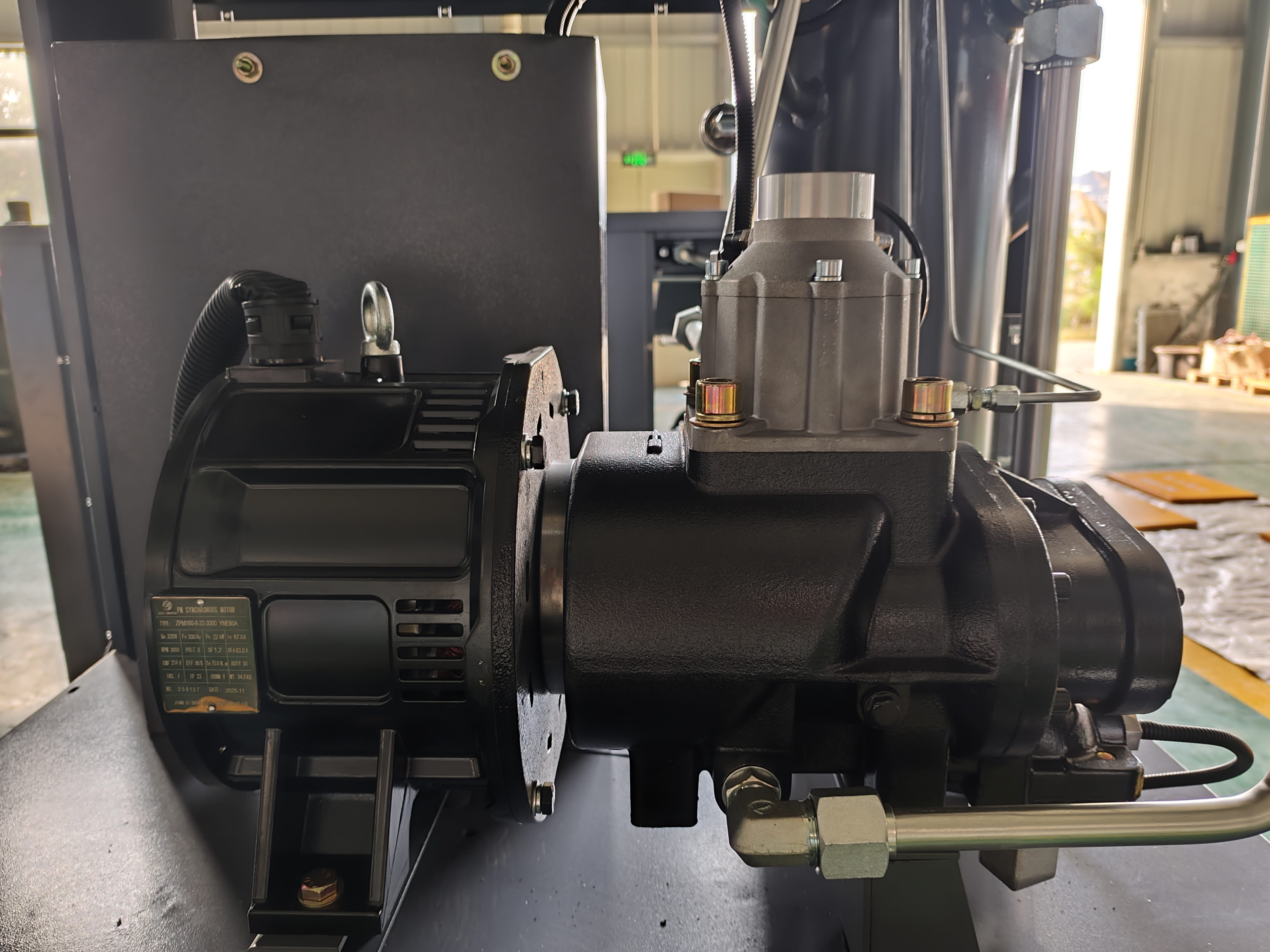
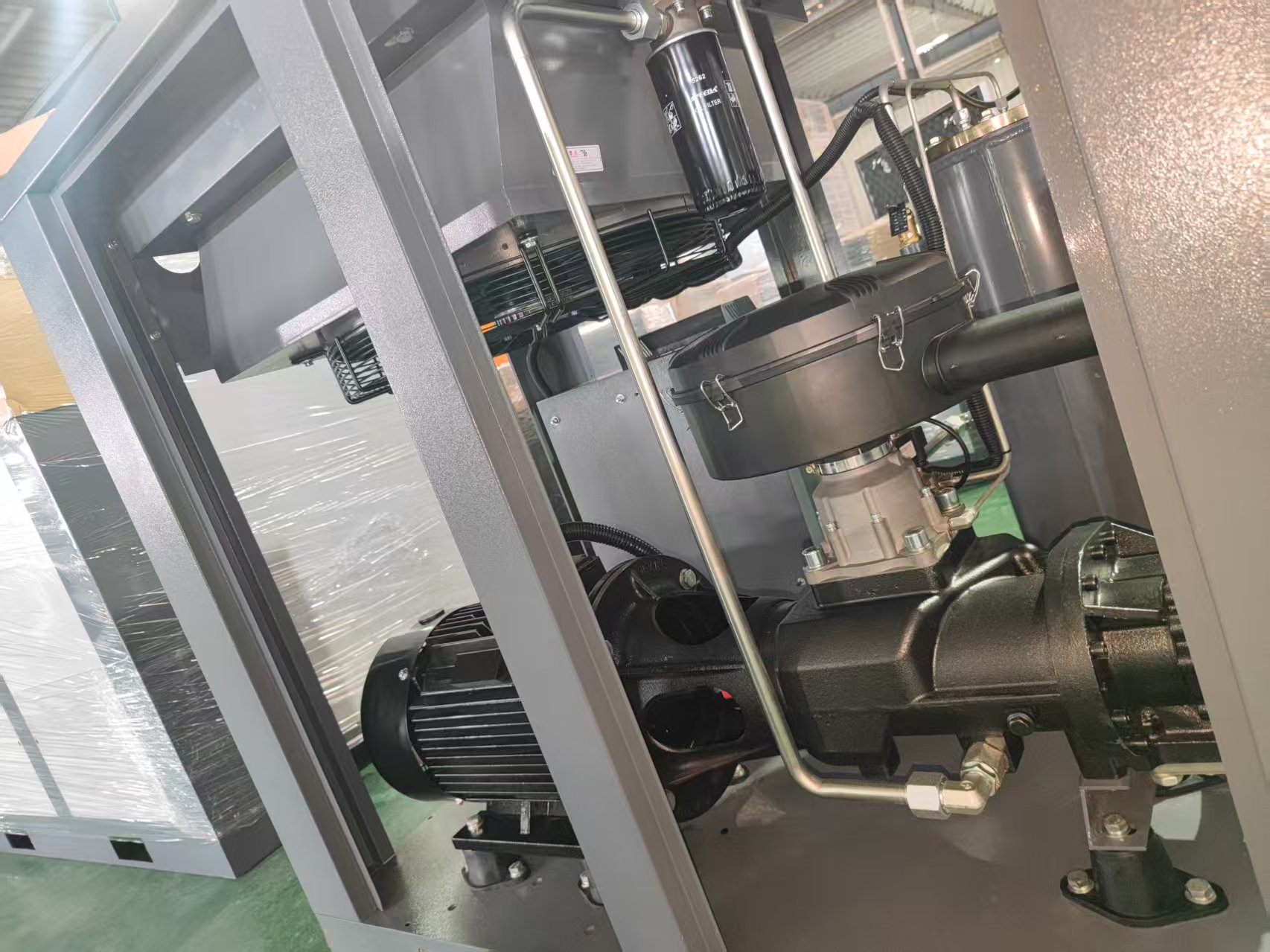
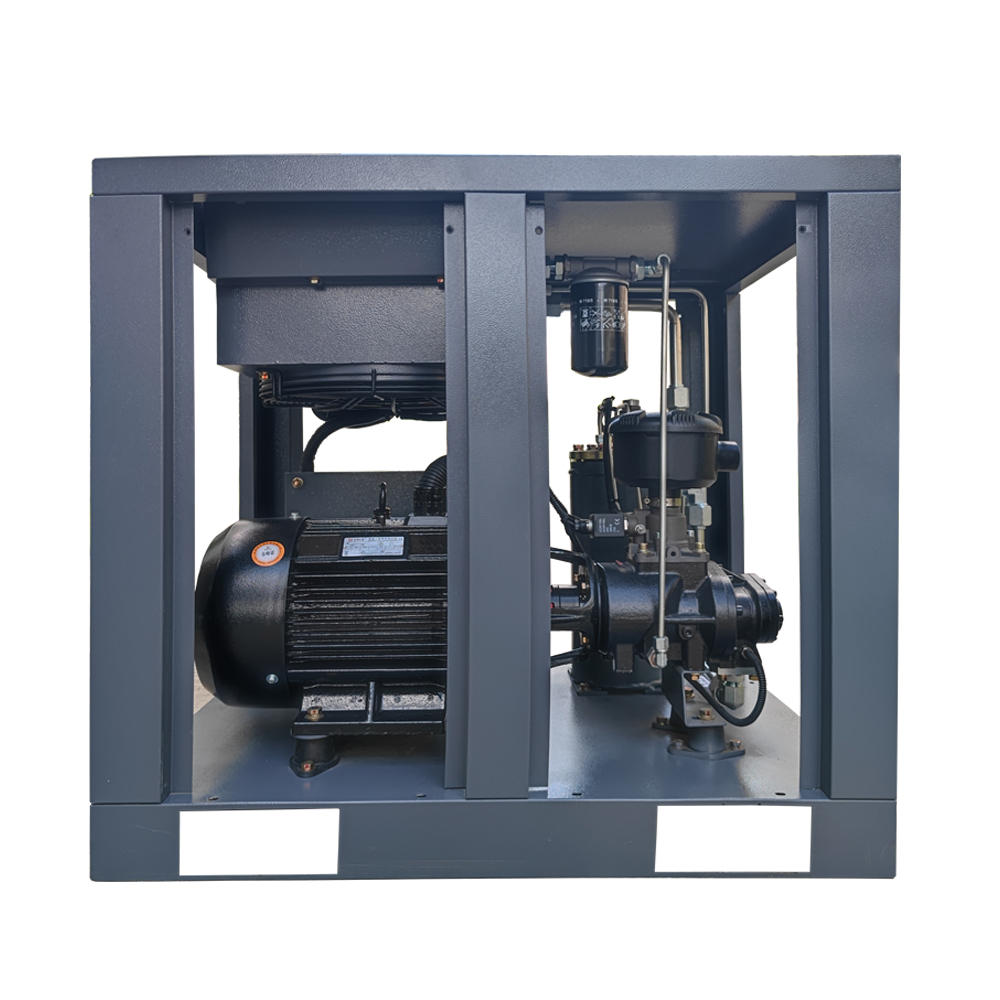
Integrated variable frequency air compressor integrate the motor, main unit, cooling system, dryer, and air tank into a single housing, forming a compact design. A typical example is the Shenzhen Energy All-Performance Integrated Screw Air Compressor, which reduces energy loss through coaxial transmission and incorporates a refrigerated air dryer and precision air filter, achieving a "plug-and-play" high-quality compressed air supply. Split-type variable frequency air compressors, on the other hand, use direct connection between the motor and main unit or separate transmission, with independent cooling and drying systems.
Performance Comparison: The Triangular Game of Efficiency, Reliability, and Cost
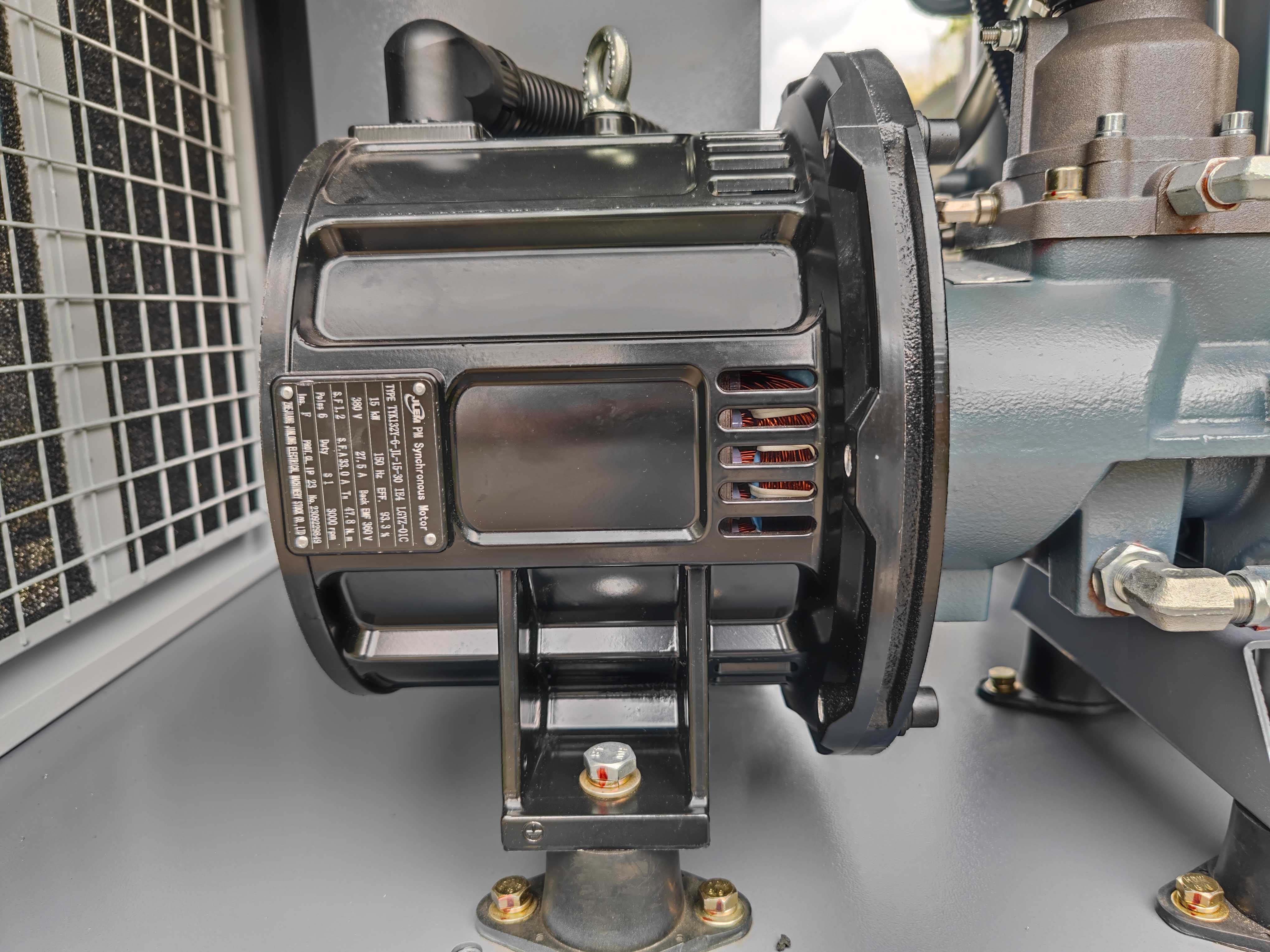
Energy Efficiency: The integrated design offers significant energy efficiency advantages under partial load conditions due to reduced transmission links and pipeline losses. Taking a 75kW model as an example, the integrated type has 8% lower power consumption than the split type at 75% load. However, under full load, the split type avoids the magnet demagnetization problem caused by the high temperature of the main unit in the integrated type due to independent motor cooling. Experimental data shows that the copper loss of the integrated motor is 25.1% higher than that of the split type at an operating temperature of 120℃, and the long-term operating efficiency decreases by about 3.5%.
Reliability and Maintenance: The integrated structure is compact, but the motor and main unit bearings share a shaft system, resulting in a more than double increase in bearing load on the motor side and a shortened lifespan. Data from an oilfield project shows that the bearing failure rate of the integrated motor is three times that of the split type. The split type distributes the load through an independent transmission system, but requires additional maintenance of the cooler and dryer, increasing maintenance costs by 15%-20%.
Space and Cost: The integrated type reduces the footprint by 40% compared to the split type and lowers installation costs by 30%, making it suitable for space-constrained industries such as electronics and pharmaceuticals. While split-type air compressors have a 10%-15% lower initial purchase cost, they require additional piping and drying equipment, gradually diminishing their overall cost advantage in large-scale projects.
Application Scenarios: Market Segmentation Determines Technology Roadmap
Integrated Variable Frequency Air Compressor:
Advantageous Areas: Small to medium flow rates (≤420L/min), high cleanliness requirements, such as food packaging and laboratory air supply. Its integrated drying system can lower the pressure dew point to -40℃, meeting oil-free compressed air standards.
Split-type Variable Frequency Air Compressor:
Advantageous Areas: Large flow rates (≥1000L/min), continuous heavy-duty scenarios, such as steel smelting and cement production. Split-type compressors can achieve flexible capacity expansion through parallel operation of multiple units; a single unit failure does not affect overall operation.
Industry Trends: Technology Integration and Market Segmentation in Parallel
With breakthroughs in permanent magnet materials and IoT technology, the industry is exploring a hybrid "integrated + split" model. For example, some companies have launched a "unit-integrated main unit + modular drying unit" design, retaining the high efficiency and energy-saving advantages of integrated compressors while reducing maintenance difficulty through detachable drying modules. Furthermore, the application of AI-based predictive maintenance systems is narrowing the reliability gap between the two structures—by monitoring motor temperature and vibration data in real time, it provides early warnings of potential faults, extending the lifespan of integrated equipment to over 10 years.
The Balance Between Efficiency and Flexibility
The competition between integrated and split-type variable frequency air compressor is essentially a trade-off between "space efficiency" and "operating efficiency" in industrial equipment. In the eastern coastal regions where land costs are high, integrated systems dominate due to their integrated advantages; while in large industrial bases in the central and western regions, split-type systems win the market with their modularity and scalability. In the future, with the deepening of dual-carbon goals, energy efficiency ratings and life-cycle cost (LCC) will become core indicators for user decisions, and technological integration and innovation may redefine the competitive landscape of the air compressor industry.

