

Single-Stage and Two-Stage Screw Air Compressor: An "Energy Efficiency Revolution" in Industrial Power Upgrading
In the global wave of accelerated industrial transformation towards green and low-carbon practices, compressed air systems, as the "invisible heart" of manufacturing, directly impact a company's production costs and carbon footprint through their energy efficiency. Statistics show that compressed air systems account for 10%-15% of total electricity consumption in the industrial sector, and screw air compressor, as core equipment, are seeing their technological iterations become a key force driving energy conservation and emission reduction in the industry. Recently, with the deepening implementation of "dual-carbon" goals, the technological competition between single-stage and two stage screw air compressor has intensified, and a "revolution" surrounding energy efficiency, cost, and reliability is reshaping the industrial power landscape.
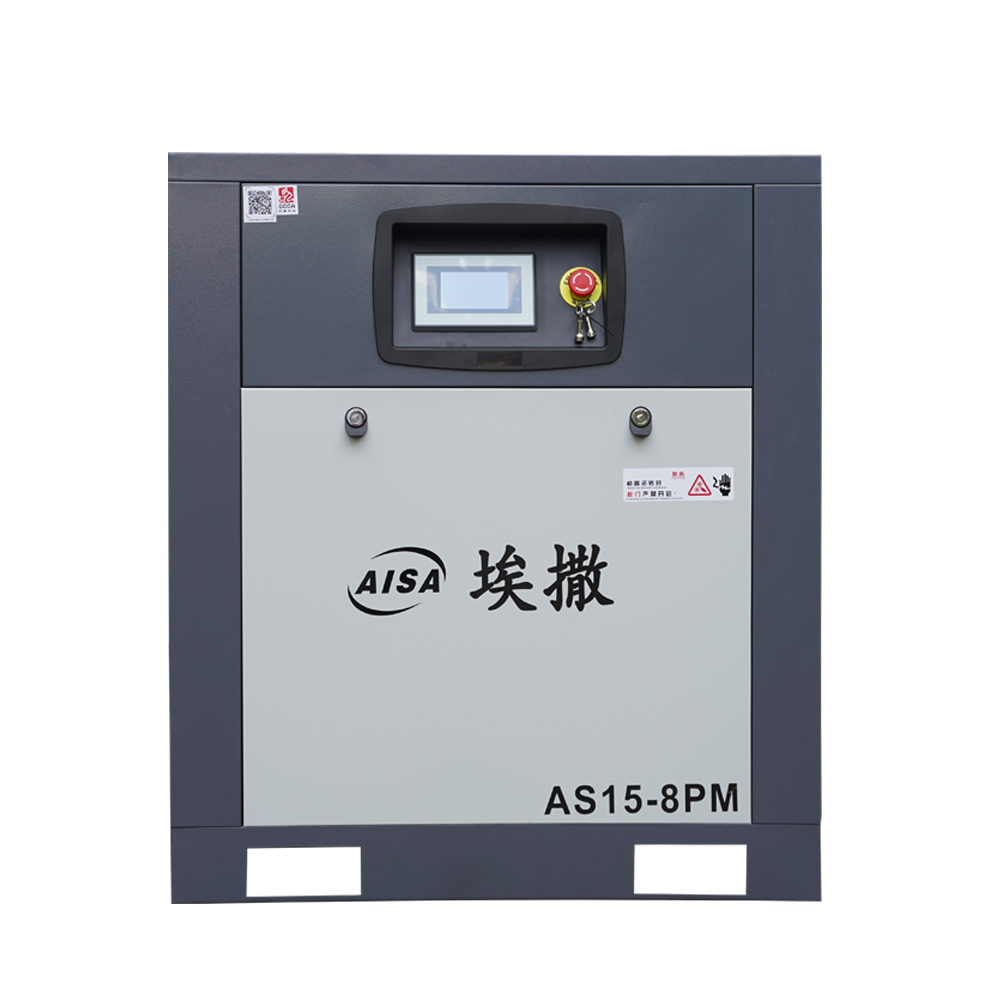
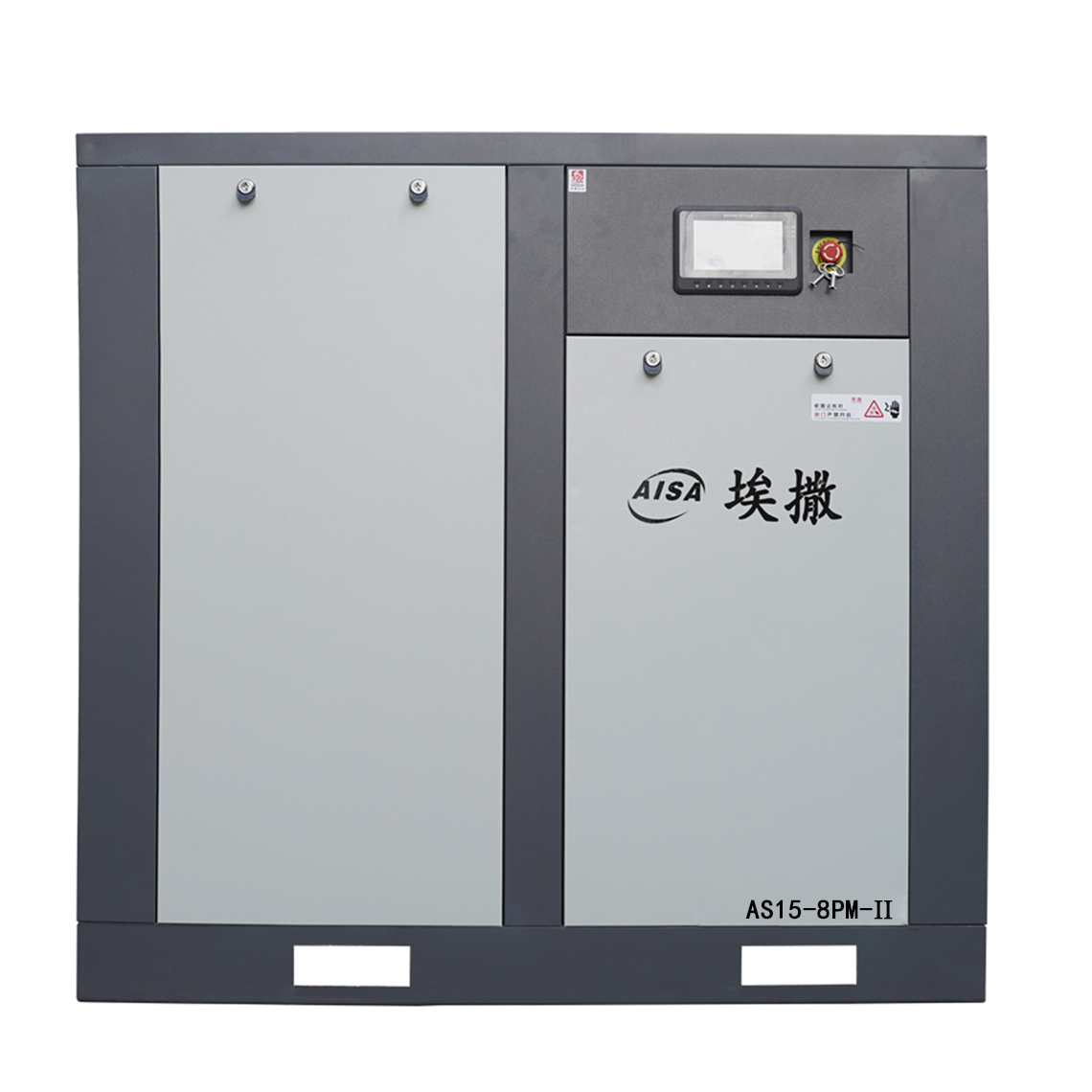
Technical Principle: The Diverging Paths of Single-Stage "Direct Strike" and Two-Stage "Segmented Breakthrough"
Single-stage variable frequency air compressor employ a "single-pass compression" design, directly compressing the intake air from its initial pressure to the target exhaust pressure through a pair of high-precision male and female rotors. Its technical logic is like a "100-meter sprint"—completing energy conversion via the shortest path. Its structure is as simple as a precision gear set, with approximately 30% fewer parts than a two-stage compressor. This design gives it a rapid response advantage in low-pressure, low-flow scenarios, but the excessively high compression ratio in a single stage leads to increased internal leakage and an exponential increase in heat loss, especially under high-pressure conditions, where isothermal efficiency significantly decreases.
Two-stage compression, on the other hand, follows a "segmented relay" principle, breaking down the compression process into two stages: air is first compressed to an intermediate pressure by the primary rotor, then cooled to near ambient temperature by an interstage cooler before entering the secondary rotor for final compression. This design reduces the compression ratio per stage by 40%-50%, more closely approximating the ideal isothermal compression process. Its technical essence is to convert the energy loss in single-stage compression into recoverable heat energy through "heat distribution" and "pressure buffering," theoretically improving system energy efficiency by 12%-18%.
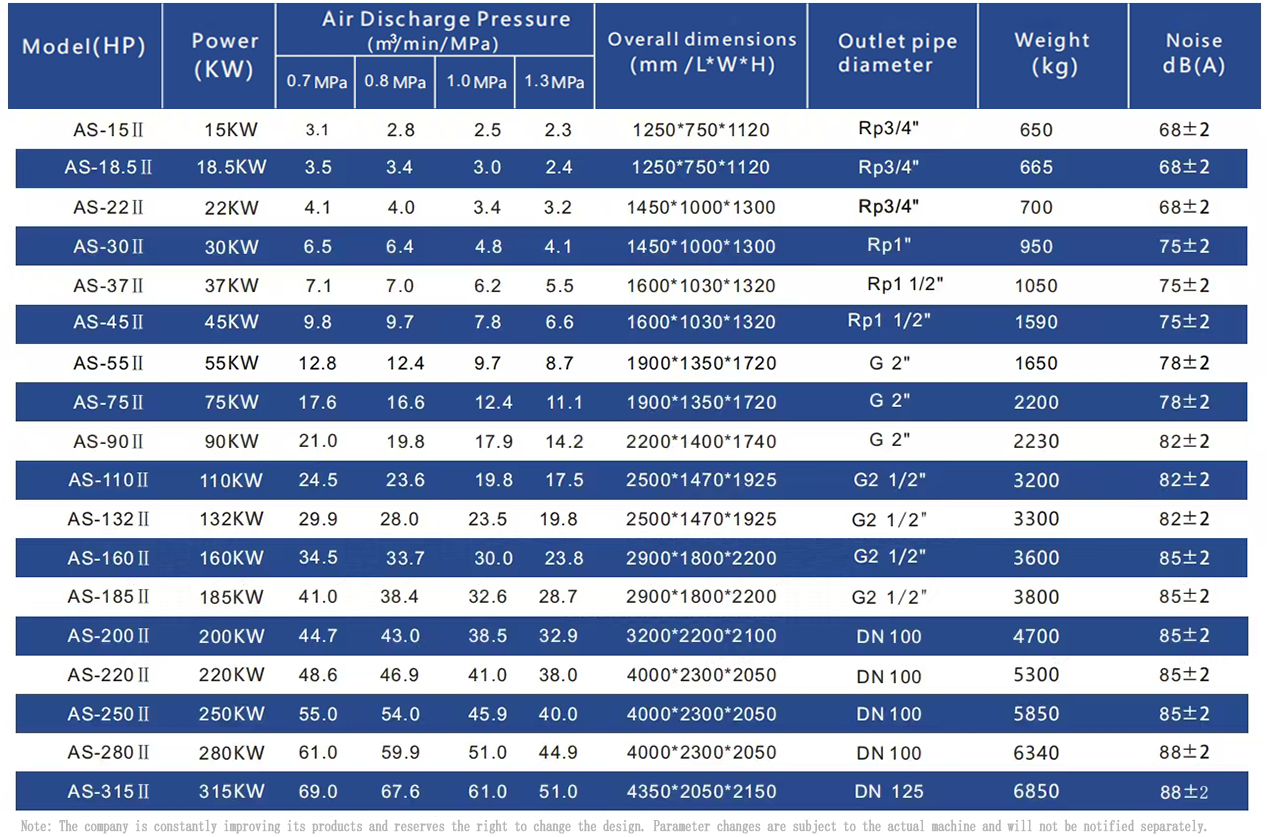
Energy Efficiency Showdown: The Efficiency Balance Under the Laws of Thermodynamics
From a thermodynamic perspective, the energy efficiency advantage of two-stage compression stems from the precise control of the compression process. In single-stage compression, the forced compression of air leads to a sharp increase in temperature, exacerbating intermolecular friction and leakage, resulting in actual compression work far exceeding the theoretical value. Two-stage compression, through interstage cooling, makes each stage of compression approach an isothermal process, significantly reducing irreversible losses. Experimental data shows that under operating conditions of 0.8 MPa exhaust pressure and 110 kW power, the two-stage compressor achieves a 15% increase in volumetric efficiency, an 8%-12% increase in exhaust volume, and a 0.03 kW·h/m³ reduction in energy consumption per unit of gas produced compared to the single-stage compressor.
Further breaking down the energy efficiency components, the energy-saving effect of two-stage compression is reflected in three dimensions:
Heat recovery efficiency: The interstage cooler can recover 60%-70% of the compression heat, which can be used for boiler preheating, process heating, and other scenarios;
Pressure stability: Dual frequency conversion collaborative control technology keeps pressure fluctuations within ±0.02 bar, reducing energy consumption from frequent start-ups and shutdowns of pneumatic equipment;
Maintenance costs: Segmented compression reduces rotor load, extending the life of key components by 30%-50% and reducing annual maintenance costs by 40%.
Application scenarios: Demand-driven technology adaptation
Single-stage compression's "comfort zone" is concentrated in low-pressure, low-flow, and intermittent gas usage scenarios. Its simple structure and low cost make it the first choice for laboratory equipment, medical instruments, and small pneumatic tools. For example, in precision testing equipment requiring rapid start-up and shutdown, single-stage models demonstrate irreplaceable advantages due to their millisecond-level response speed and compact design. Furthermore, the miniature single-stage air compressor, through optimized transmission gears and sealing structure, increases the output air driving force by 30% while reducing assembly costs to 60% of the two-stage model, further expanding its application boundaries in portable devices.
Two-stage compression dominates in high-energy-consuming, continuous-operation, and high-pressure demand scenarios. Its technological advantages are particularly prominent in industries such as metallurgy, textiles, and photovoltaics:
High-pressure scenarios: The two-stage model, with its "two-stage screw + plate-fin heat exchanger" structure, can stably output high-pressure gas of 1.0-4.0MPa, meeting the high-end needs of semiconductor packaging, military manufacturing, and other industries;
High-flow-rate scenarios: The modular design allows for parallel expansion of the two-stage system, with a single unit's air output exceeding 100m³/min, suitable for the centralized gas supply needs of large steel plants and chemical industrial parks;
Energy-efficiency-sensitive scenarios: In the textile industry, the two-stage model, through its "0.5-1.0MPa wide-pressure adjustment" function, solves problems such as yarn breakage and poor dyeing, improving product qualification rate by 3% and indirectly reducing energy consumption by 15%.
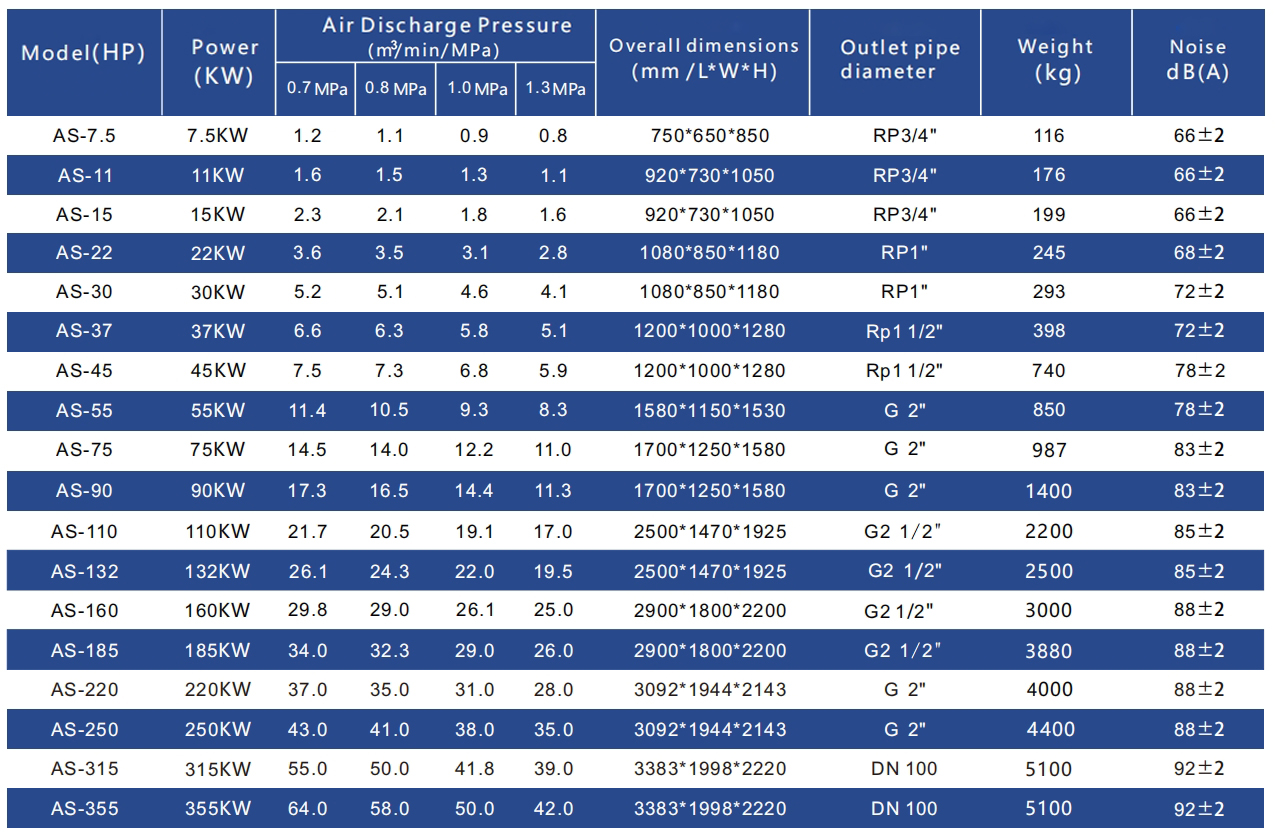
Market Trends: Technological Convergence and Ecosystem Reconstruction
Currently, the air compressor industry is shifting from "competition for single equipment" to "competition for system solutions." Breakthroughs are occurring in two-stage compression technology, moving towards three-stage compression and ultra-high pressure (25 bar+). For example, a company's "three-stage compression + magnetic levitation bearing" system has increased isentropic efficiency to 88%, demonstrating potential in emerging fields such as hydrogen production and carbon capture. Simultaneously, intelligentization and modularization are becoming new focal points of competition: two-stage models, by incorporating edge computing modules, achieve real-time energy efficiency optimization and predictive maintenance; while single-stage models, through a "maintenance-free air filter + long-life oil filter" design, extend the maintenance cycle to 8000 hours, reducing total lifecycle costs.
Expert Opinion: Selection Requires Tailored Solutions, Technology Needs Continuous Evolution
"Two-stage compression is not a panacea; selection must consider both the air usage scenario and cost," points out an expert from the China Compressor Association. "For continuous operation and high compression ratio scenarios, two-stage compressors offer significant energy savings; however, for intermittent air usage and low-pressure demand scenarios, single-stage compressors still offer a cost-performance advantage. In the future, with the popularization of technologies such as permanent magnet variable frequency and oil-free lubrication, the energy efficiency gap between single-stage and two-stage compressors will further narrow, but the technological barriers of two-stage compressors in high-pressure, high-flow scenarios will remain difficult to overcome."
In this energy efficiency revolution, whether it's the continuous improvement of single-stage compressors or the breakthroughs in energy efficiency of two-stage compressors, the ultimate goal is to help the manufacturing industry achieve a green transformation. With the deepening of "dual-carbon" policies and the advancement of Industry 4.0, the air compressor industry is shifting from "price competition" to "value competition." Only companies that accurately match needs and continuously innovate can gain a competitive edge in this transformation.

