

A Deep Dive into Air Compressor Cooling Methods: The Differentiated Competition Between Air Cooling and Water Cooling
In industrial production, screw air compressor, as core power equipment, directly impact production efficiency due to their operational stability. The choice of cooling system is a key factor determining air compressor performance. Currently, the two mainstream cooling methods on the market, air cooling and water cooling, present a stark contrast due to their different technical characteristics, providing important reference for enterprises in their selection process.
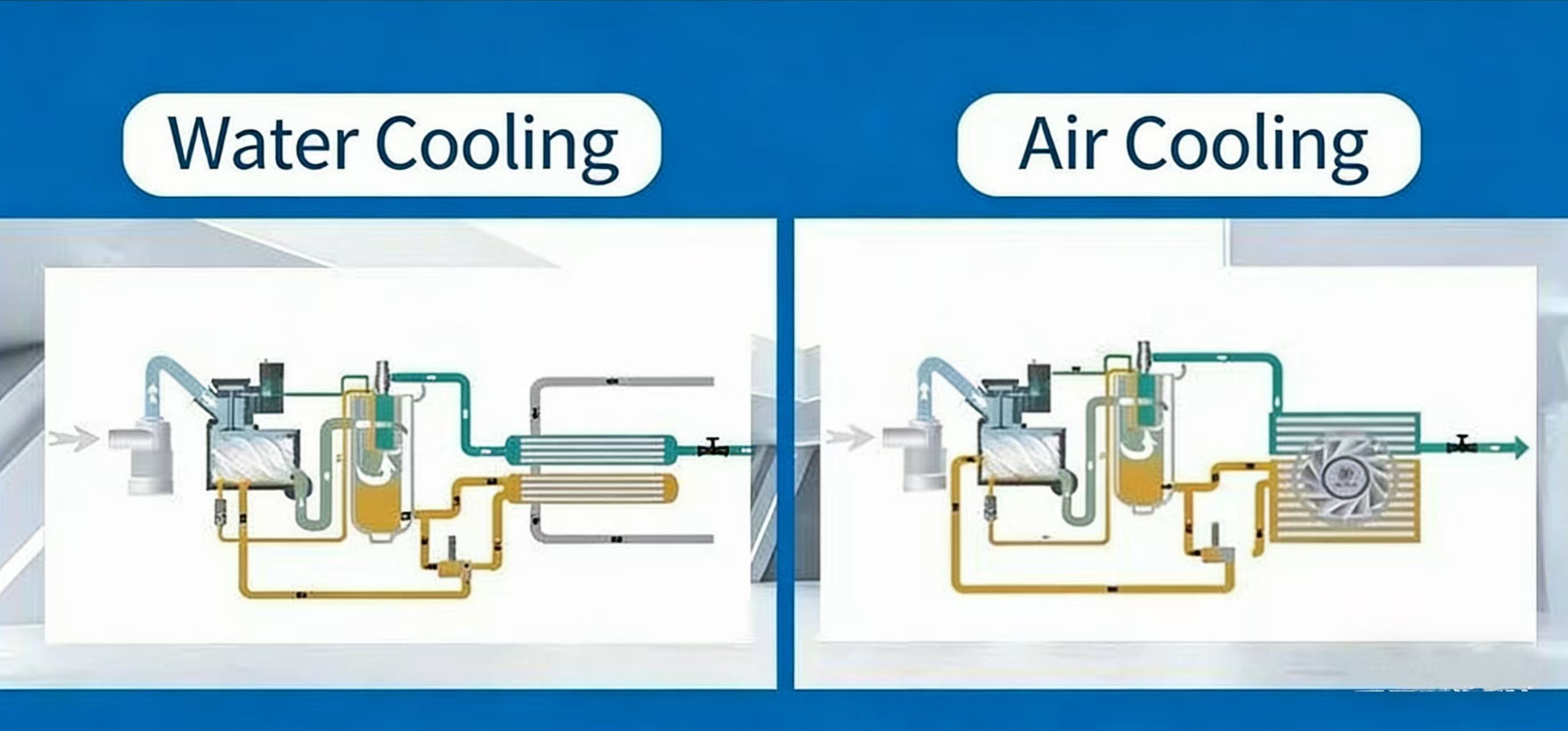
Cooling Principle: The Battle Between Natural Convection and Forced Circulation
Air cooling systems force airflow through heat dissipation fins using a fan, utilizing airflow to remove heat. Taking an automobile manufacturing plant as an example, a 220KW air-cooled two-stage screw air compressor installed there experienced a 37% decrease in heat dissipation efficiency compared to its design value at an ambient temperature of 35℃, causing the exhaust temperature to exceed the 105℃ warning line, forcing it to operate at reduced load. Water-cooled systems employ a closed-loop design, where cooling water efficiently exchanges heat with the heat of compression in the heat exchanger. A chemical company using water-cooled units maintains a constant water temperature of 32℃ via a cooling tower, ensuring exhaust temperatures remain below 85℃ even in high summer temperatures, guaranteeing 24-hour full-load operation.
Cost Structure: Trade-offs between Initial Investment and Long-Term Maintenance
From an installation cost perspective, air-cooled systems eliminate the need for water pipes and cooling towers, resulting in equipment procurement costs that are 23%-35% lower than water-cooled systems. However, in terms of maintenance, water-cooled systems exhibit significant advantages: comparative data from a textile factory shows that its water-cooled units have an average annual maintenance cost of 12,000 yuan, mainly involving water treatment and pipe inspection; while air-cooled units of the same capacity require an annual investment of 38,000 yuan for deep cleaning due to dust accumulation on the heat sinks, and the heat sink modules need to be replaced every 3 years, resulting in a total cost 41% higher than water-cooled systems.
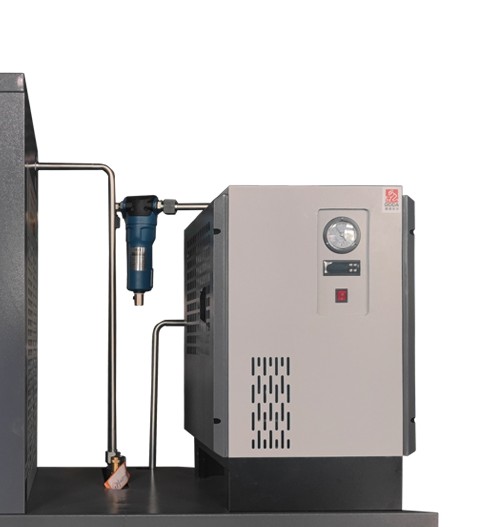
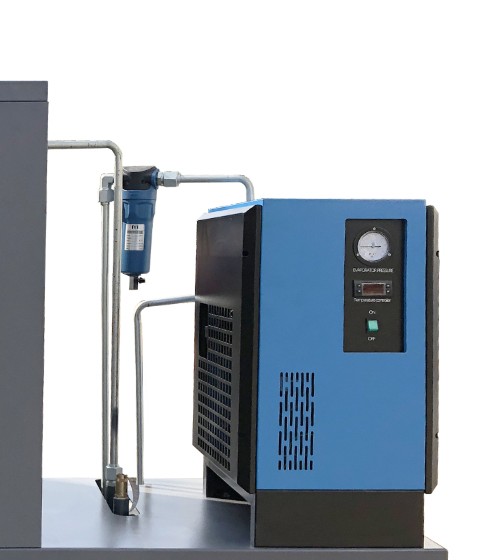
Environmental Adaptability: Technology Fit Under Resource Constraints
In dusty environments such as cement production, the closed structure of water-cooled systems effectively avoids dust blockage problems. Actual test data from a cement plant showed that the heat dissipation efficiency of water-cooled units decreased by only 8% after 5 years of operation, while the heat dissipation efficiency of air-cooled units decreased by 34% due to dust covering the heat dissipation fins. The opposite trend is observed in water-scarce regions. A coal mine in Inner Mongolia saved 120,000 tons of water annually after adopting an air-cooling system, while also eliminating investment in water treatment equipment and chemical costs.
Energy Efficiency Performance: The Relationship Between Temperature Control and Energy Consumption
Temperature fluctuations significantly impact the energy efficiency of screw air compressors. Water-cooled systems, through precise temperature control, can keep exhaust temperature fluctuations within ±2℃. Actual tests by a semiconductor company showed that this stability reduces unit gas production energy consumption by 18% compared to air-cooled systems. Especially during hot seasons, air-cooled systems need to increase fan speed to maintain heat dissipation, leading to an additional 25%-30% increase in energy consumption, creating a vicious cycle of "high temperature - high energy consumption - even higher temperature."
Technological Evolution: Innovation Directions Towards Intelligence and Integration
Modern water-cooling systems are evolving towards intelligence, equipped with IoT water quality monitoring modules that can monitor parameters such as cooling water pH and conductivity in real time. AI algorithms predict scaling trends, extending maintenance cycles from 3 months to 9 months. Air-cooling systems have achieved breakthroughs in structural innovation, with the development of flow-guiding heat dissipation fins increasing air utilization by 40% and maintaining rated capacity even at 40℃.
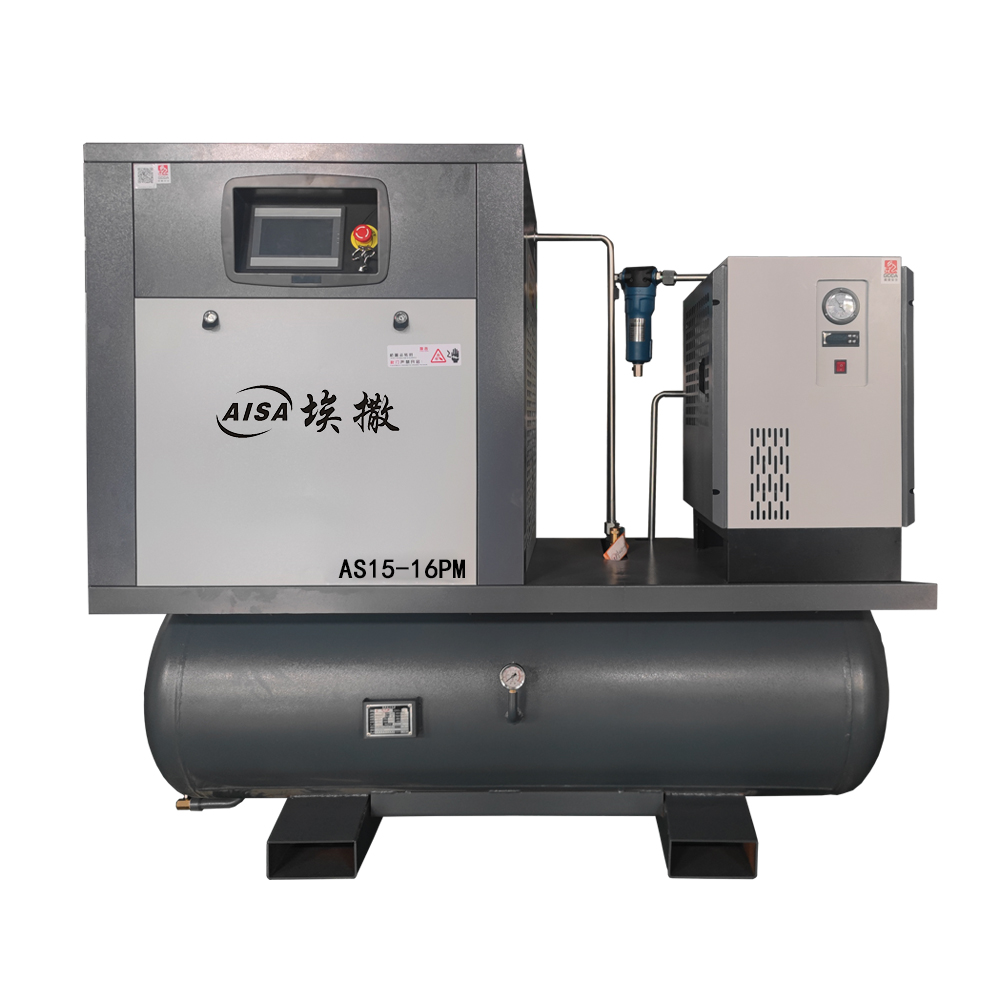
Industry Application Guide: Scenario-Based Selection Strategy
High-Load Scenarios: For continuously operating equipment with power > 160KW, water-cooling systems are the preferred choice. A certain automobile factory's 250KW water-cooled unit saved 380,000 yuan in electricity costs annually, and the heat recovery system met 60% of the factory's hot water needs.
Water-Scarce Areas: In areas with annual rainfall < 400mm, air-cooling systems are more economical. A photovoltaic company in Northwest China saved 220,000 yuan in water costs annually after adopting an air-cooling solution.
Clean Environment: In industries with stringent requirements for compressed air quality, such as food and pharmaceuticals, the closed structure of water-cooled systems can reduce the risk of air pollution. A pharmaceutical company's tests showed that the oil content in the compressed air produced by water-cooled units was 67% lower than that of air-cooled units.
Currently, with the advancement of Industry 4.0, variable frequency air compressor cooling systems are showing a trend of integrated development. A company has developed a hybrid cooling system that uses water cooling for key components to ensure stability, while using air cooling for auxiliary modules to reduce costs, achieving a measured energy saving rate of 29%. This technological innovation provides a new solution for the industry, indicating that cooling technology will evolve towards greater efficiency and flexibility.

