

Single-Stage VS Two-Stage Air Compressor: A Dual Battle of Energy Efficiency and Cost
In 2025, with the deep integration of Industry 4.0 and the "dual-carbon" strategy, screw air compressor, as the "power heart" of manufacturing, are undergoing rapid technological iteration, reshaping the industry landscape. According to the latest industry data, two stage screw air compressor, with their 12%-25% energy-saving advantage, have achieved a penetration rate exceeding 75% in the high-end market, while single-stage compressors, with their cost advantage, still dominate the mid-to-low-end market. Behind this technological battle lies a dual struggle between improving energy efficiency and reducing manufacturing costs.
Technical Principle: A Leap from "Single Compression" to "Stage Optimization" A single-stage compressor directly compresses air from intake pressure to exhaust pressure using a pair of screw rotors, completing a single energy conversion. Its structure is simple, but the single compression ratio is typically as high as 8-10, leading to increased internal leakage, bearing overload, and a shortened lifespan of the compressor over long-term operation. For example, after 30,000 hours of continuous operation, the bearing wear rate of a single-stage compressor from a certain brand was 40% higher than that of a two-stage compressor.
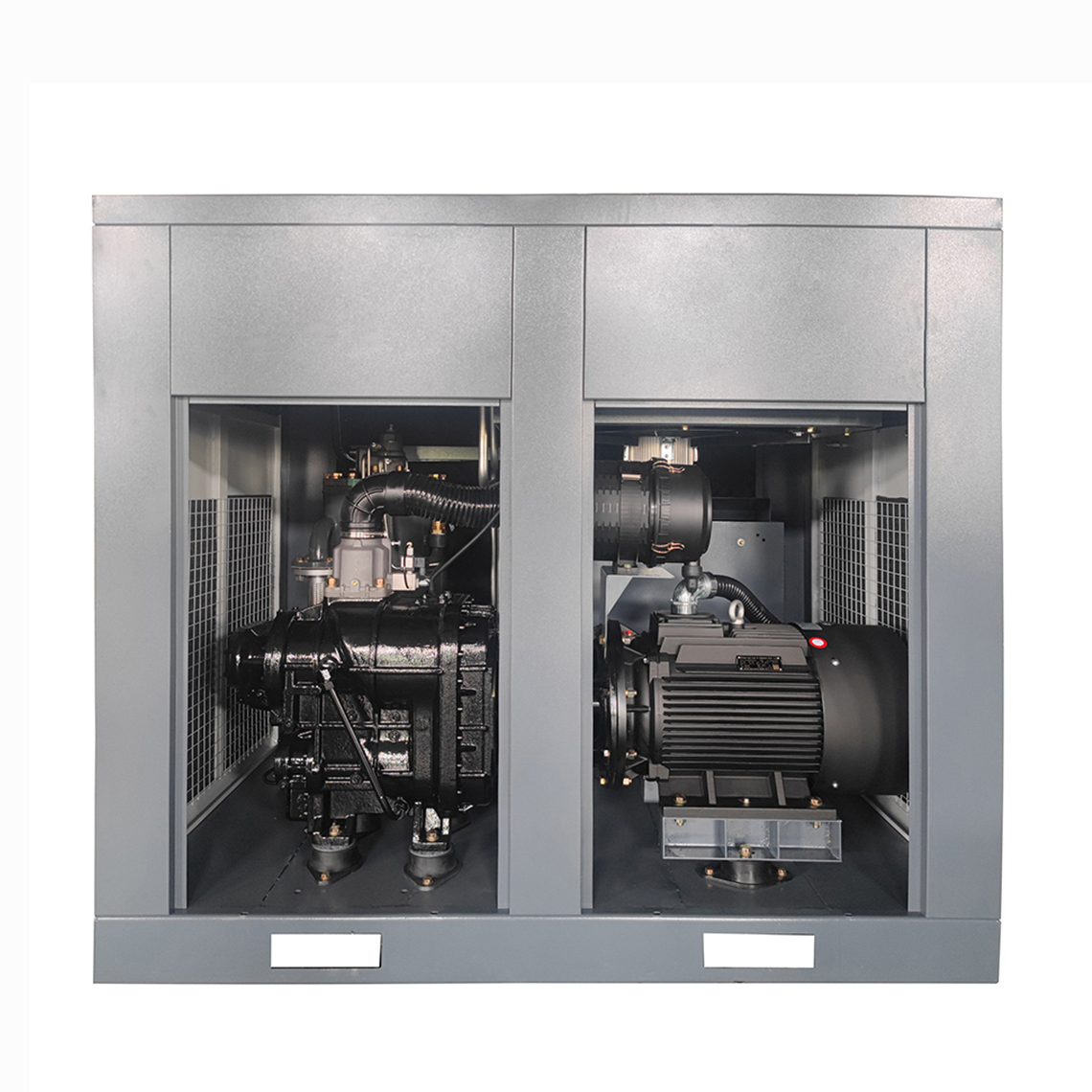
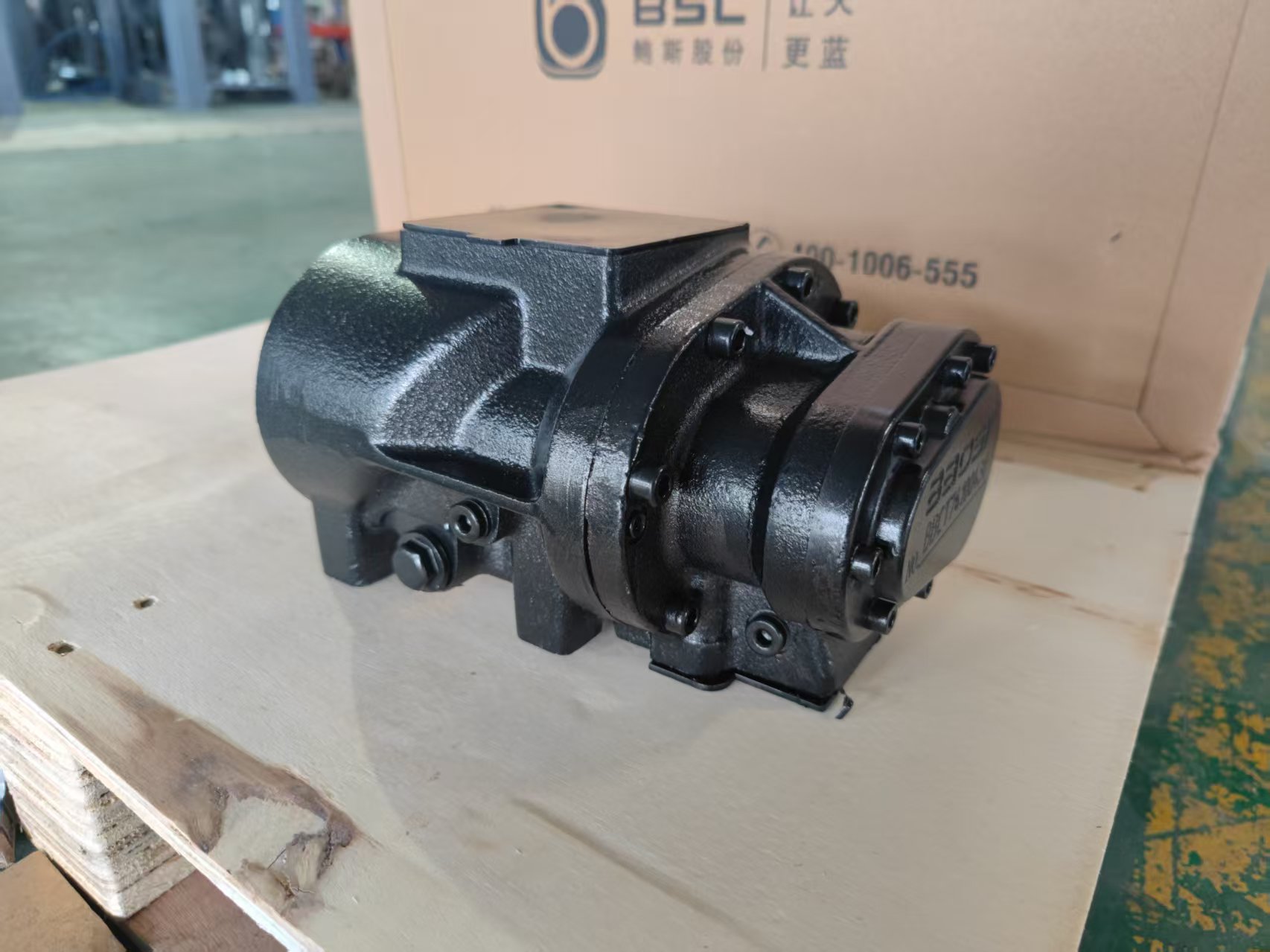
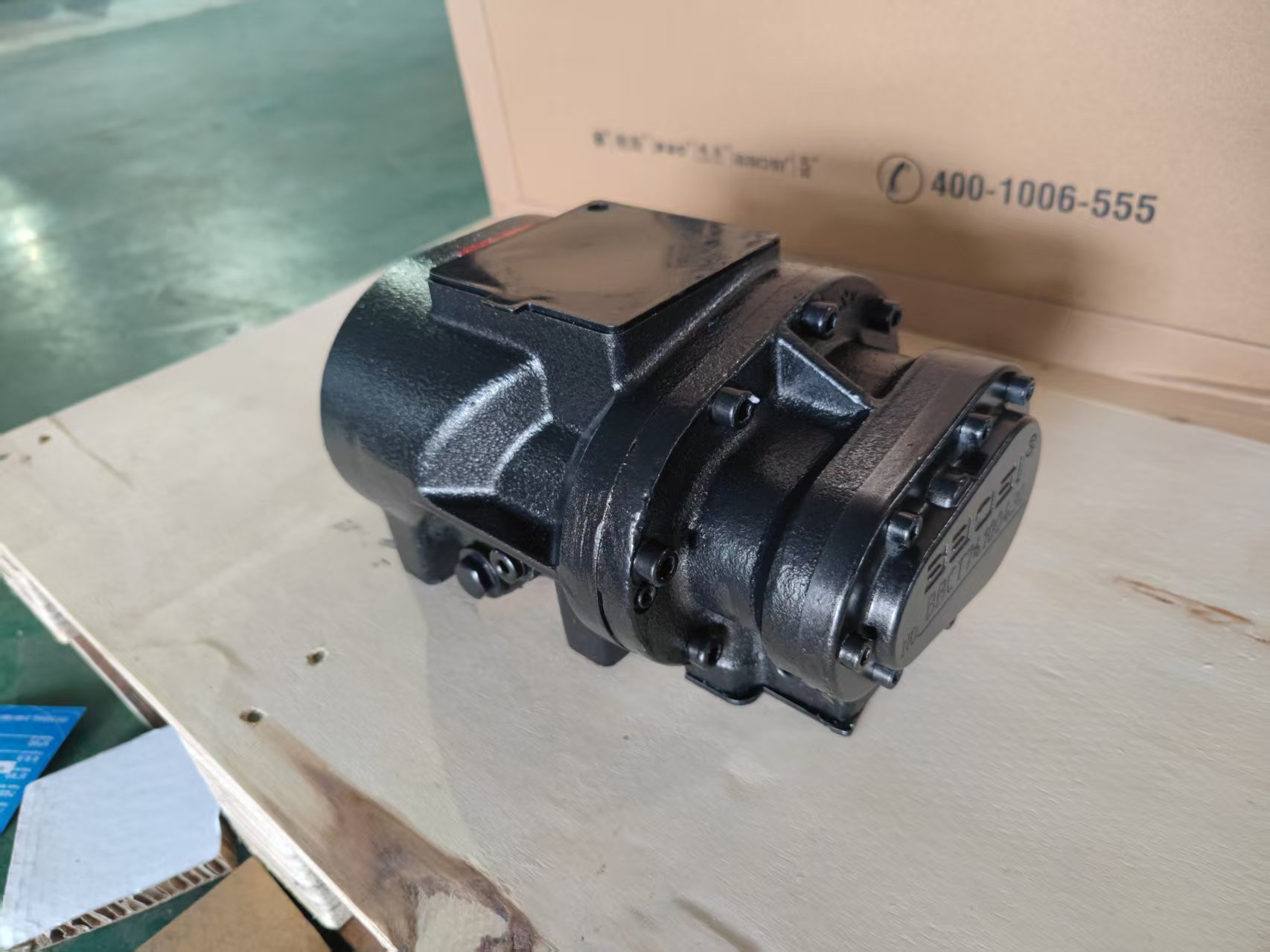
The two stage air compressor employs "stage compression + interstage cooling" technology, dividing the compression process into two stages: after the first stage compresses to an intermediate pressure, the gas is cooled to below 40°C by a plate-fin cooler before entering the second stage for final compression. This design reduces the single-stage compression ratio to 4-5, increases volumetric efficiency by 15%-20%, and reduces internal leak
age by more than 30%.
Performance Comparison: The Triangular Game of Energy Efficiency, Reliability, and Cost
Energy Efficiency: The two-stage air compressor, through a near-isothermal compression process, can theoretically save 12%-17% of energy consumption. Actual test data shows that at 7.5 bar pressure, the two-stage compressor saves approximately 3.2 KWh per hour compared to the single-stage compressor. Based on 8,000 hours of operation per year, a single unit can save up to 25,600 KWh annually, equivalent to a reduction of 18.7 tons of carbon emissions.
Reliability Differences: The low compression ratio design of the two-stage compressor significantly reduces bearing load. For example, SKF ceramic-coated bearings have a design life of 50,000 hours, while single-stage compressors, due to high load operation, typically have a bearing life of only 20,000-30,000 hours. Furthermore, the independent oil lubrication system of the two-stage compressor separates the oil supply to the compression chamber and bearings, avoiding malfunctions caused by oil contamination and extending the maintenance cycle to 4,000 hours, double that of single-stage compressors.
Manufacturing Costs and Return on Investment: The manufacturing cost of a two-stage compressor is 30%-40% higher than that of a single-stage compressor, mainly due to the precision machining requirements and the interstage cooling system. However, the long-term operating cost advantage is significant: for example, the initial investment for a 110kW model is approximately 280,000 RMB for a two-stage compressor and approximately 200,000 RMB for a single-stage compressor, but the total cost over 5 years (including electricity and maintenance costs) is 120,000 RMB lower for the two-stage compressor, with a payback period of only 2.3 years.
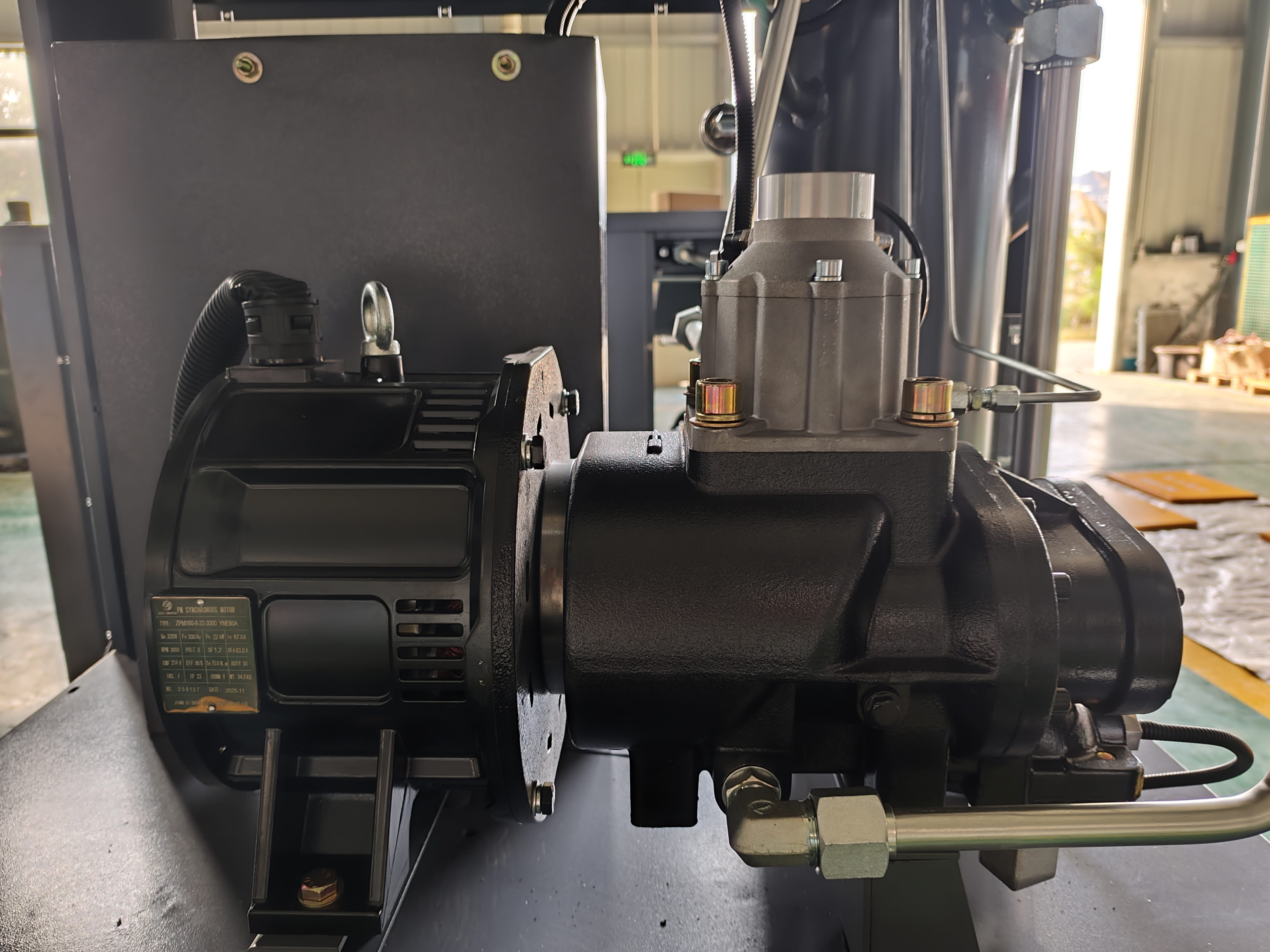
The low-to-mid-range market presents a transitional solution of "single-stage compressor + variable frequency control". AISA has launched single-stage air compressor and energy-saving screw air compressor by optimizing the single-stage rotor profile and motor efficiency to meet general industrial air demand. For example, the AISA series single-stage models achieve 10% energy savings compared to traditional models through permanent magnet variable frequency technology, but their energy efficiency still lags behind two-stage models by 5%-8%.
Future Trends: Technological Integration and Scenario-Based Innovation
With the popularization of permanent magnet frequency conversion and Internet of Things technologies, two-stage compressor hosts are evolving towards intelligence and modularity. The intelligent IoT system in the AISA series can monitor more than 200 operating parameters in real time and automatically optimize the compression ratio through AI algorithms, further improving energy efficiency by 5%. Single-stage models, on the other hand, focus on innovation in specific scenarios
"The essence of technological competition is the creation of user value," industry experts point out. The advantages of two-stage compressors in energy efficiency and reliability have formed a technological barrier, while single-stage models need to seek survival through cost control and scenario adaptation. In this energy efficiency revolution, only companies that balance technological innovation and user needs will gain the initiative in the future market.

