

New Trends in Industrial Energy Conservation: Differences Between Conventional Variable Frequency Air Compressor and Permanent Magnet Variable Frequency Air Compressor
In the industrial manufacturing sector, air compressors, as core power equipment, have long been a major contributor to high energy consumption. Industry data shows that air compressors account for approximately 15%-30% of total industrial electricity consumption, highlighting the urgent need for energy-saving upgrades. With the widespread adoption of variable frequency technology, conventional variable frequency air compressor and permanent magnet variable frequency screw air compressor have become the mainstream choices in the market. However, the differences between the two in terms of drive systems, energy efficiency, and maintenance costs are sparking a new round of discussions on technological upgrades in the manufacturing industry.
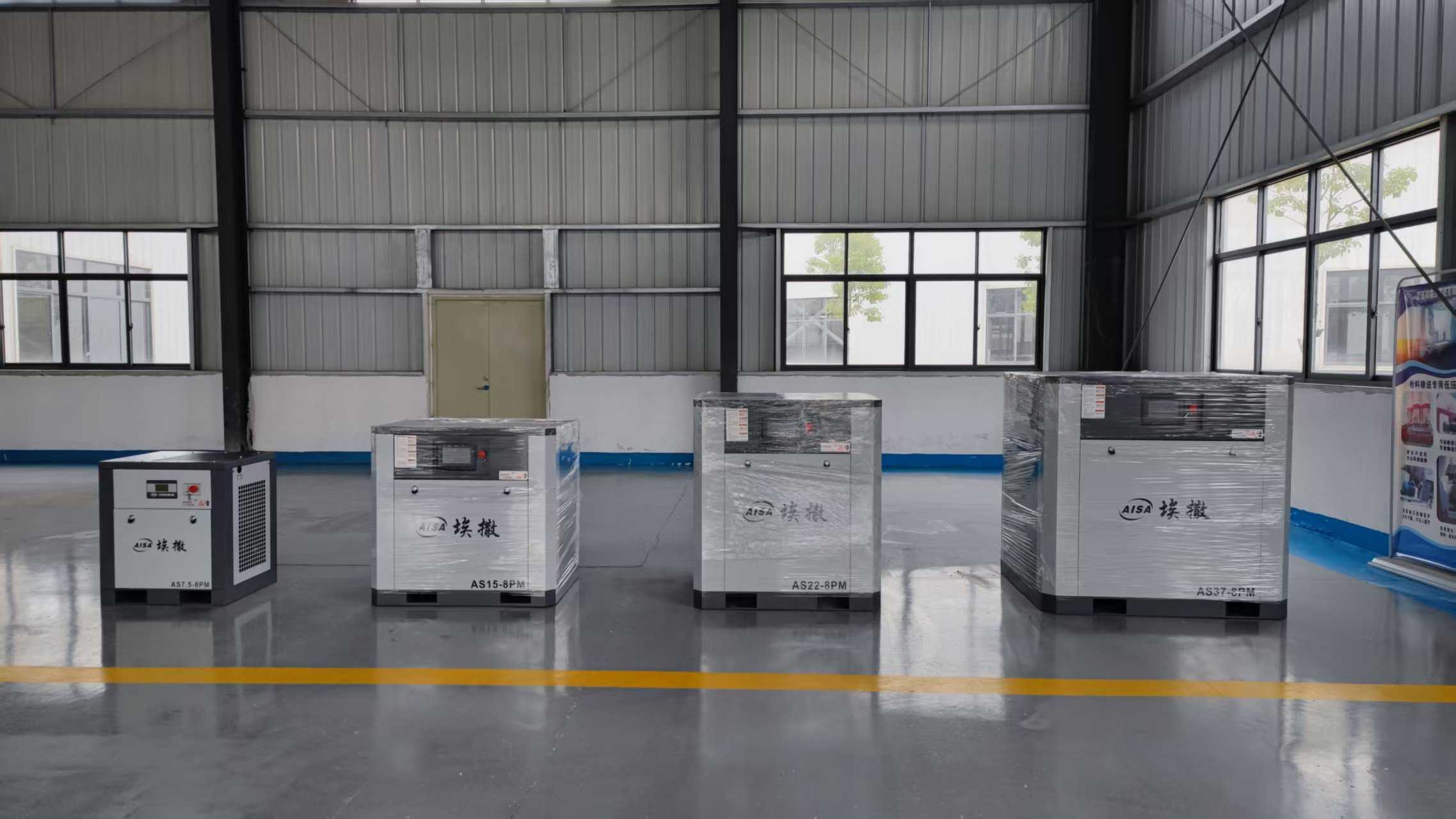
Technical Core: Motor Differences Determine Performance Boundaries
Conventional variable frequency air compressor use traditional asynchronous motors, adjusting speed through an external frequency converter to achieve flow control. Their core drawback lies in the fact that the motor rotor relies on the stator winding for excitation, resulting in excitation losses and slip, leading to an efficiency of only 85%-90% under rated operating conditions. When the load is below 50%, the system needs to maintain pressure through an unloading valve, resulting in 25%-35% no-load energy consumption. Actual test data from an auto parts company shows that its ordinary variable frequency air compressor consumes 180,000 kWh annually in intermittent air supply scenarios, limiting its energy-saving potential.
In contrast, the permanent magnet variable frequency screw air compressor is equipped with a rare-earth permanent magnet synchronous motor (IPM). The rotor magnetic field is provided by neodymium iron boron permanent magnets, achieving a theoretical efficiency exceeding 95%. Its innovative integrated design directly connects the motor and screw air compressor coaxially, eliminating transmission components such as belts and couplings, achieving 100% transmission efficiency. More importantly, vector control technology expands its speed adjustment range to 10%-100%. Operating records from a food packaging workshop show that it can still stably maintain a pressure of 0.7 MPa at 15Hz with no unloading loss, resulting in 40% higher annual energy savings compared to ordinary models.
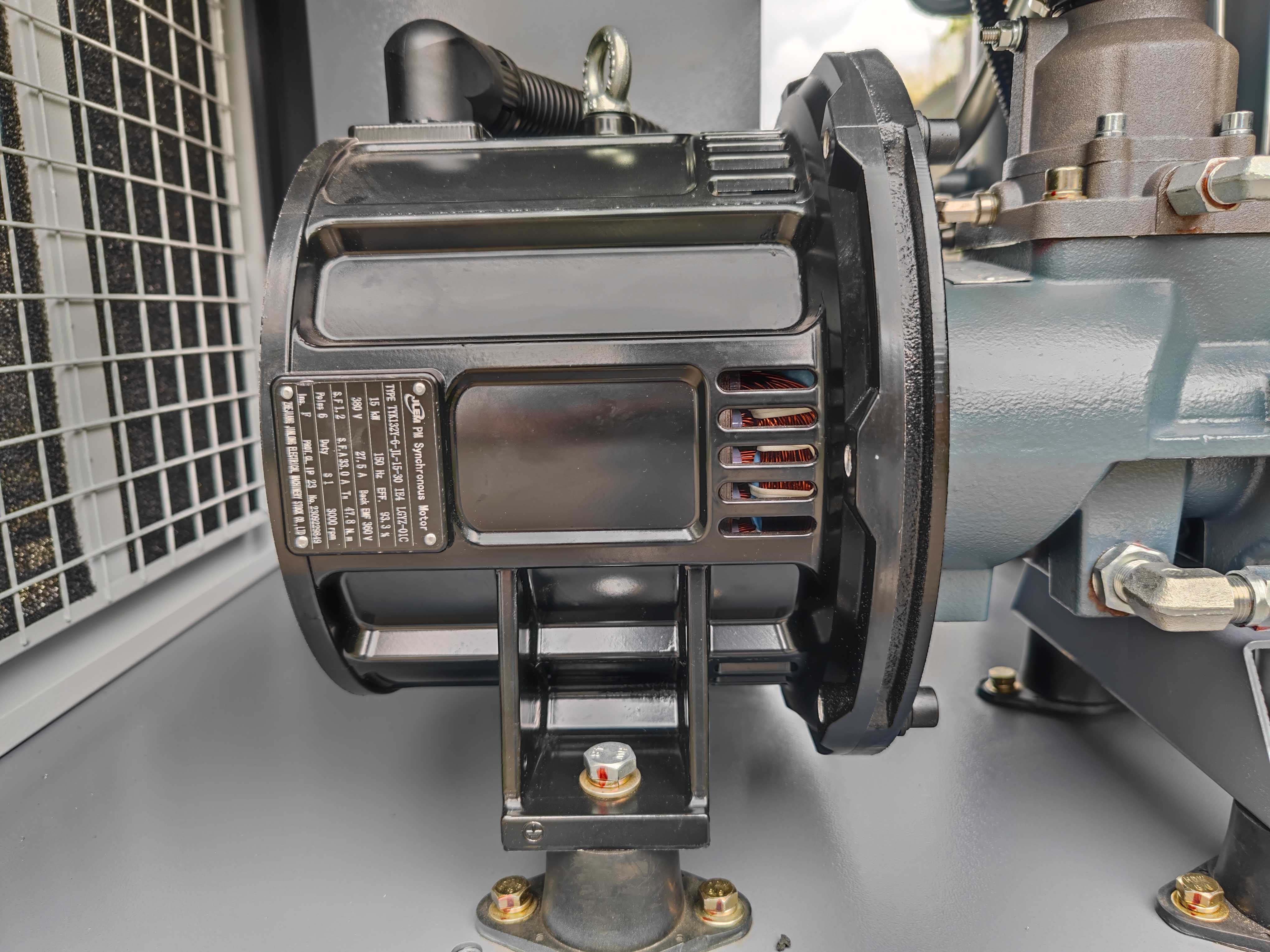
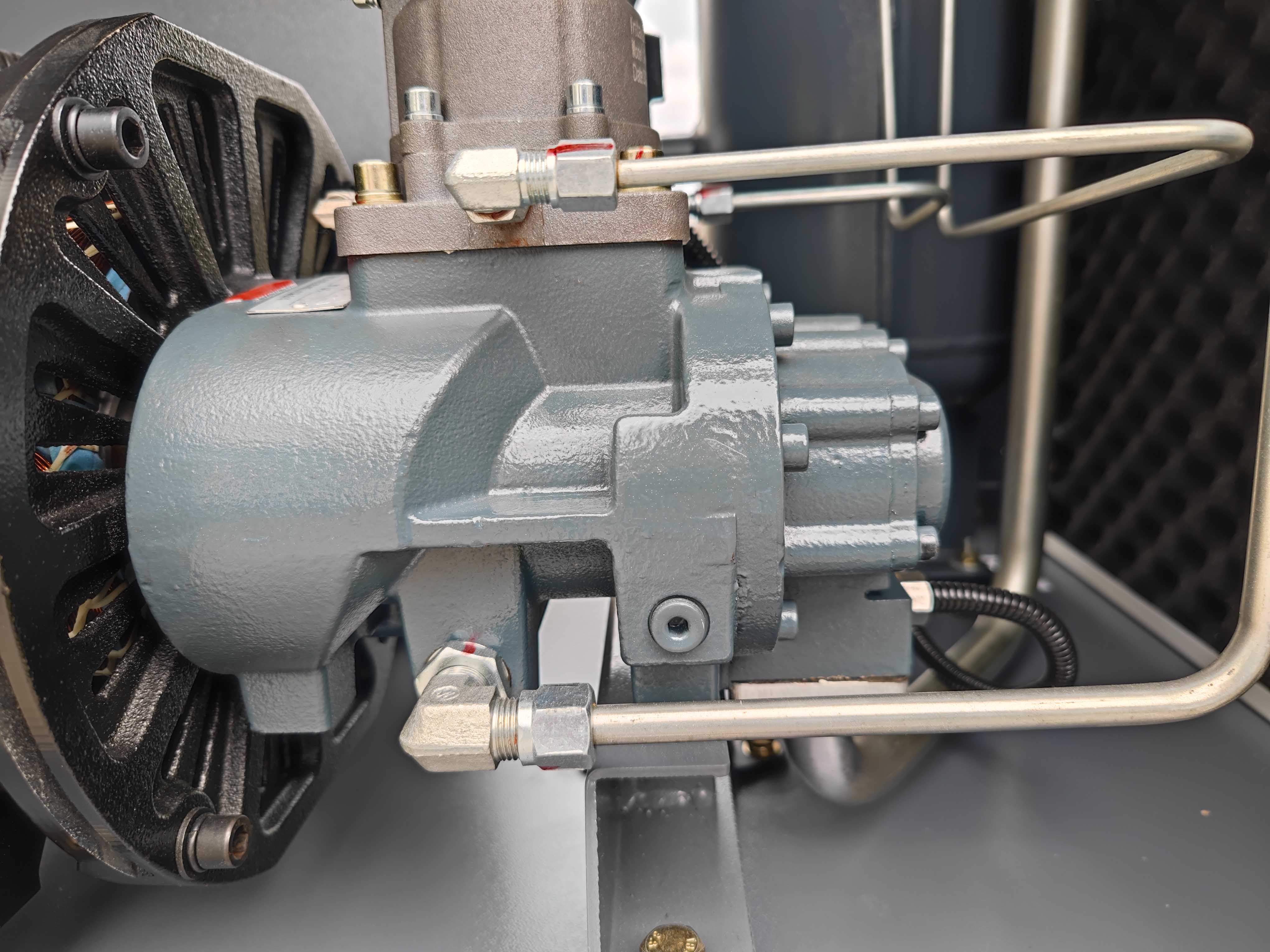
Energy Efficiency Showdown: Actual Test Data Reveals Cost Differences
Taking an electronics manufacturing company as an example, its production line requires a stable 24-hour air supply, with pressure fluctuations controlled within ±0.1 bar. The conventional variable frequency air compressor used before the upgrade employed a fixed 50Hz speed design. When air consumption dropped to 40%, frequent system unloading led to persistently high energy consumption. After switching to a permanent magnet compressor, the IoT intelligent system matched air production demand in real time, resulting in a measured overall energy efficiency improvement of 31.5%, saving over 120,000 yuan in electricity costs annually, with a payback period of only 11 months.
Technical parameter comparisons show that the efficiency curve of the permanent magnet compressor is smooth within the 25%-100% load range, while the efficiency of the conventional variable frequency compressor drops sharply below 50% load. Taking a 75kW model as an example, the permanent magnet compressor consumes approximately 520,000 KWh annually, a reduction of 180,000 kWh compared to the conventional model. Based on an electricity price of 0.6 yuan/kWh, this translates to annual cost savings of 108,000 yuan.
Operational and Maintenance Revolution: Reliability Reshapes the Industry Landscape Traditional asynchronous motors, due to the presence of rotor lead coils, have a failure rate more than three times that of permanent magnet motors. Operational records from a chemical company show that its conventional variable frequency air compressors require bearing replacement an average of four times per year, with single downtime losses exceeding 50,000 yuan. In contrast, permanent magnet compressors feature a bearingless design, extending motor life to 10 years, maintenance cycles to 8,000 hours, and lubricant consumption by 50%.Regarding space utilization, permanent magnet compressors reduce overall size by 40% through integrated design. In a brewery renovation case, the new equipment's footprint was reduced from 12 square meters to 7 square meters, freeing up crucial space for production line expansion. Furthermore, its operating noise level of below 75 decibels is 15 decibels lower than conventional models, significantly improving the workshop working environment.
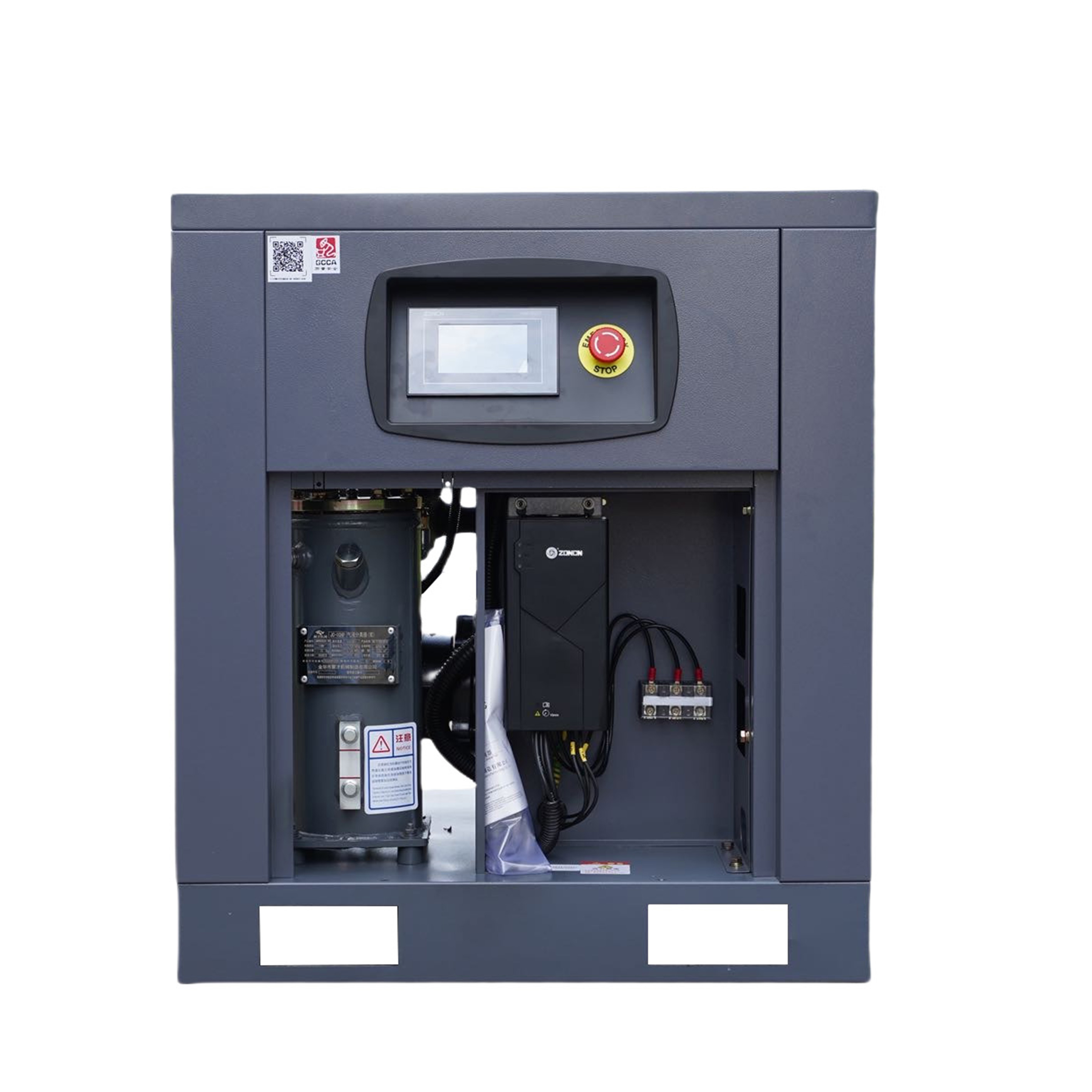
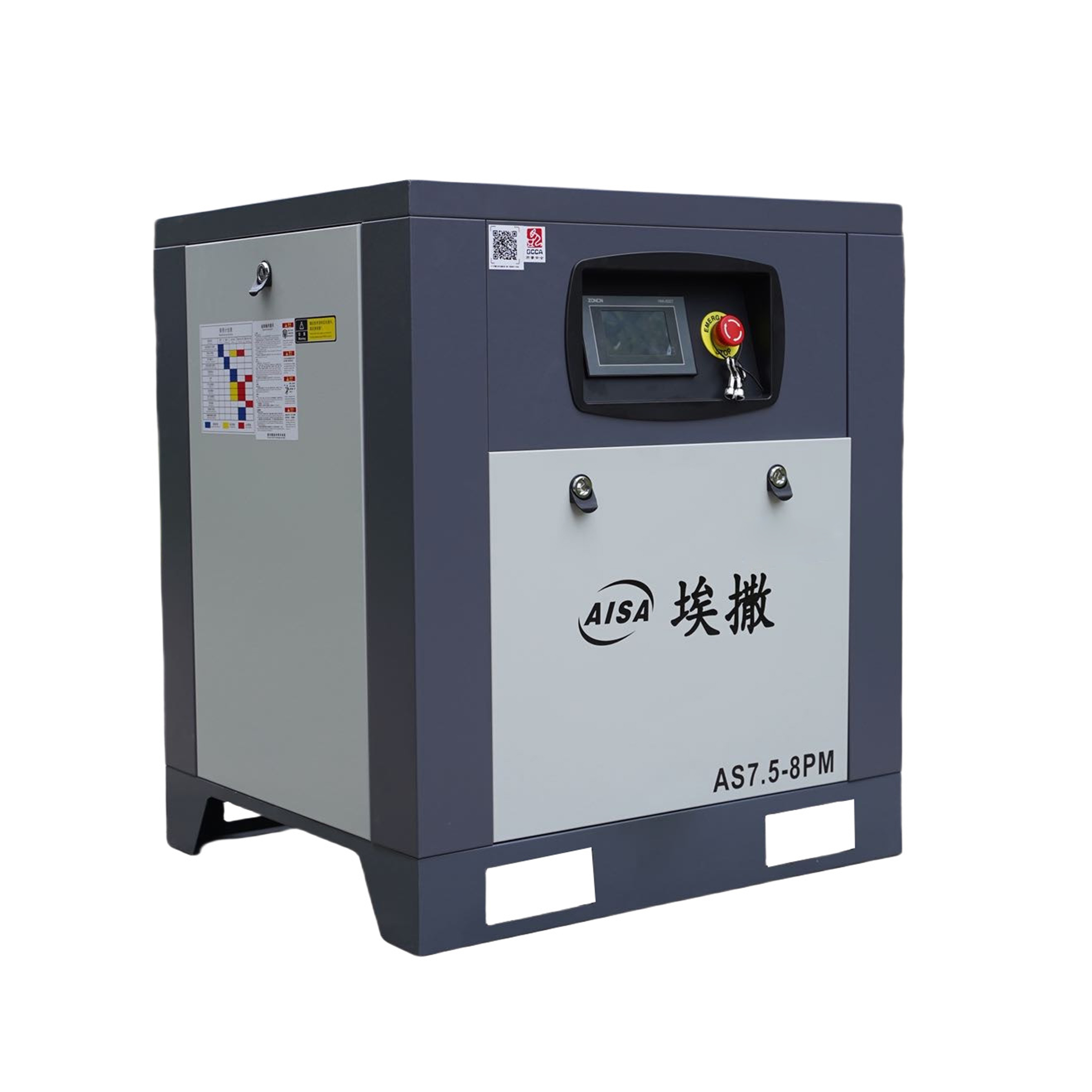
Market Choice: The Art of Balancing Technological Upgrades and Costs
Although the initial investment for permanent magnet compressors is 20%-30% higher than that of conventional variable frequency compressors, their life-cycle cost advantage is becoming increasingly apparent. Based on a 10-year usage cycle, the total cost (equipment + electricity + maintenance) of permanent magnet compressors is 35%-50% lower than that of conventional models. Government-introduced energy-saving subsidy policies have further shortened the investment payback period, with some regions offering subsidies of up to 15% of the equipment price for Level 1 energy-efficient air compressors.
Industry experts point out that permanent magnet compressors have significant advantages for scenarios with frequent fluctuations in air consumption and continuous operation exceeding 6,000 hours per year; while for intermittent production scenarios with stable air consumption, ordinary variable frequency compressors remain cost-effective. With the mandatory implementation of the IE4 energy efficiency standard, permanent magnet technology is penetrating from high-end manufacturing to general industrial sectors, and its market share is expected to exceed 40% by 2026.
In this energy-saving technology race, permanent magnet variable frequency screw air compressor, with their breakthroughs in core motor technology, are redefining the efficiency standards of industrial air compression. For the manufacturing industry, choosing the right technology route is no longer just a decision about equipment procurement, but a strategic choice concerning the company's green transformation.

