

Variable Frequency Air Compressor VS Fixed Frequency Air Compressor: A Dual Battle in Industrial Energy Conservation
In industrial production, screw air compressor, as core equipment in pneumatic systems, account for 15%-30% of a company's total electricity consumption. With the advancement of "dual-carbon" goals, variable frequency air compressor, with their high efficiency, energy saving, and stable output, are gradually replacing traditional fixed frequency air compressor and becoming the focus of industrial energy conservation transformation. This article will deeply analyze the differences and competitive landscape between the two from four dimensions: technical principles, energy consumption performance, application scenarios, and industry trends.
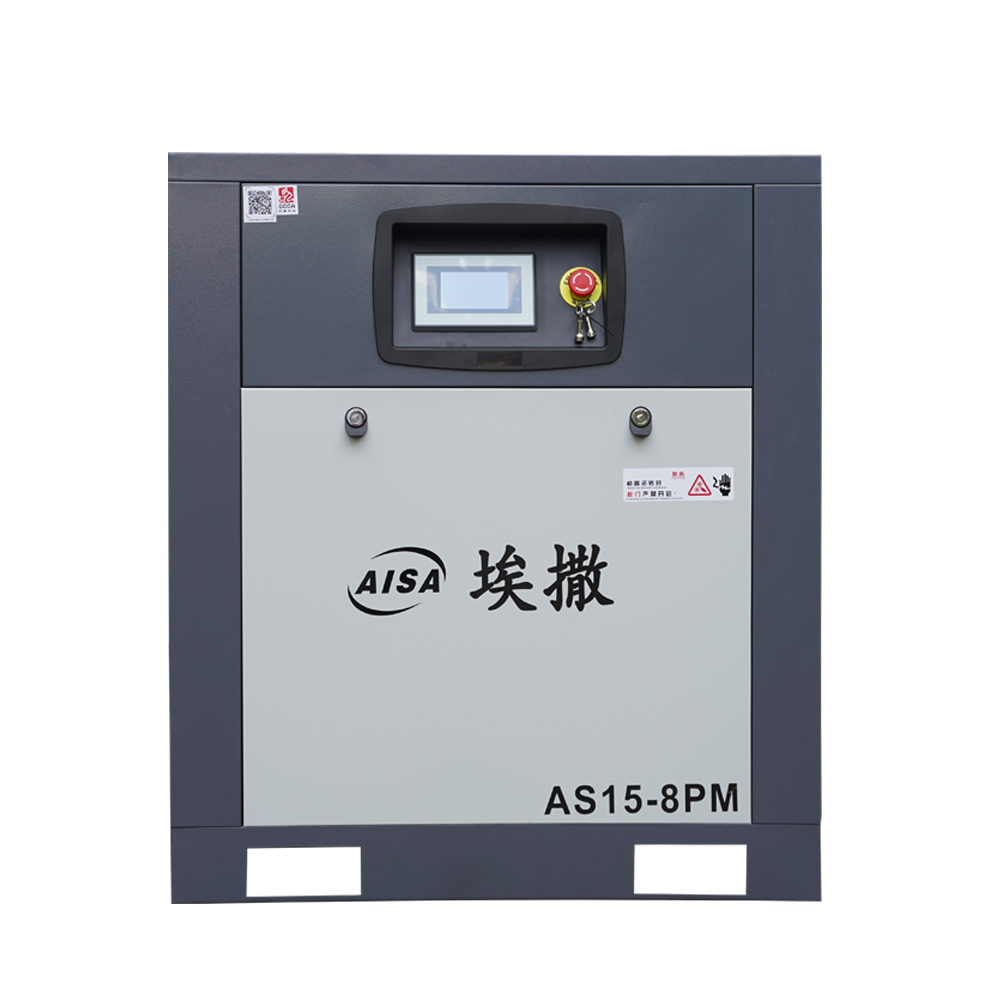
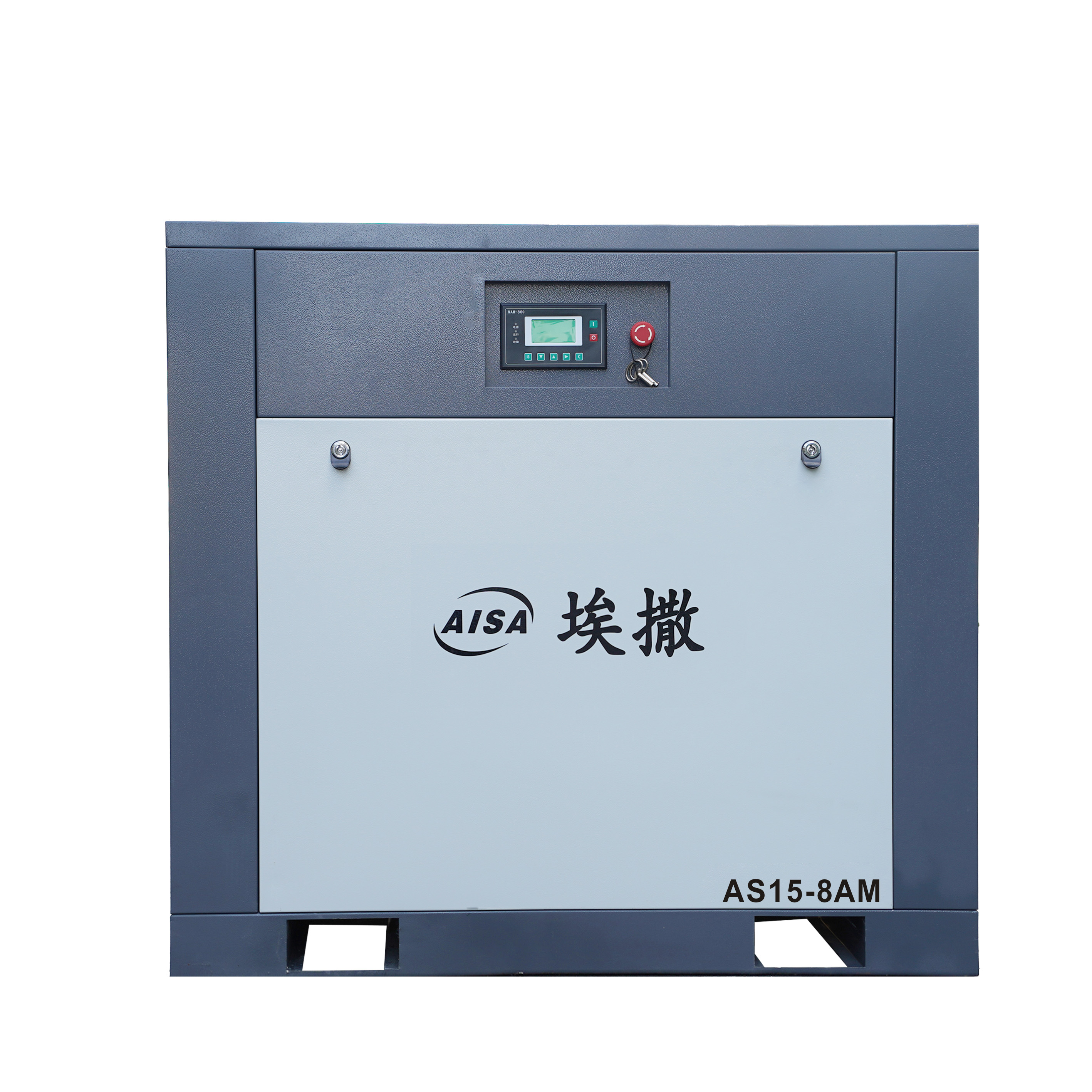
Technical Principles: Speed Regulation VS Start-Stop Control
Fixed frequency air compressor use a fixed frequency (50Hz) to drive the motor and control start-stop via a mechanical pressure switch. When the system pressure is lower than the set value, the motor runs at full speed; after reaching the upper pressure limit, the motor stops. This "on-demand" mode results in large pressure fluctuations, and frequent start-stop cycles significantly impact the power grid and equipment.
Variable frequency air compressor, on the other hand, adjust the motor speed in real time through a frequency converter to achieve "on-demand air supply." When air consumption decreases, the motor speed decreases, and the compressed air output decreases accordingly; conversely, the speed increases to match demand.
Its core advantages are:
Pressure stability: Pressure fluctuations can be controlled within ±0.01MPa, meeting the stringent requirements of industries such as precision manufacturing and pharmaceuticals.
Soft start characteristic: The motor accelerates smoothly from 0Hz, avoiding a 6 times starting current surge and extending equipment life.
Intelligent control: An integrated PID closed-loop control system automatically adjusts operating parameters based on real-time data feedback from pressure sensors.
Energy consumption comparison: Energy saving rate up to 40%. The energy consumption problem of fixed-frequency air compressors stems from their "overpowered" operating mode. To cope with maximum air demand, equipment selection typically allows for a 20%-30% margin, resulting in significant energy waste during light-load operation. For example, actual test data from a car manufacturer shows that the no-load power consumption of a fixed-frequency air compressor during low-load periods (such as nighttime) accounts for as much as 45%, resulting in annual electricity waste exceeding 500,000 yuan.
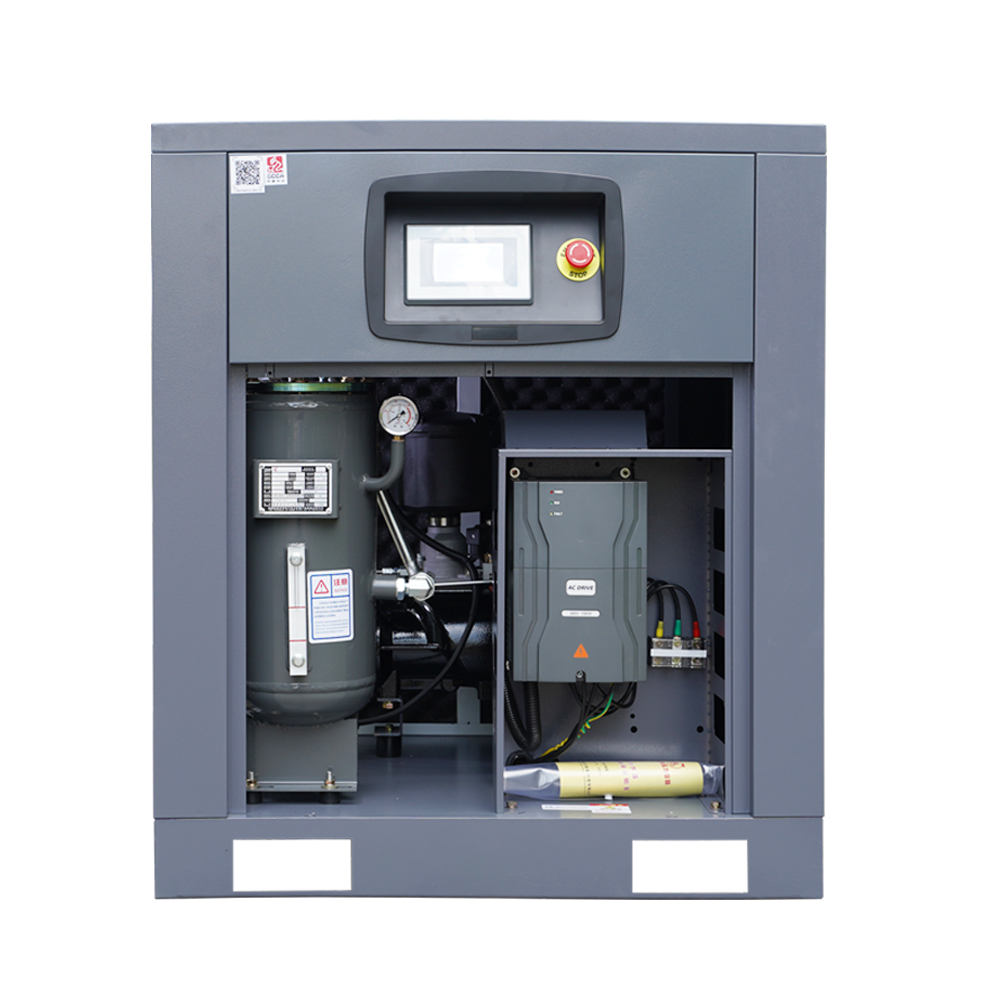
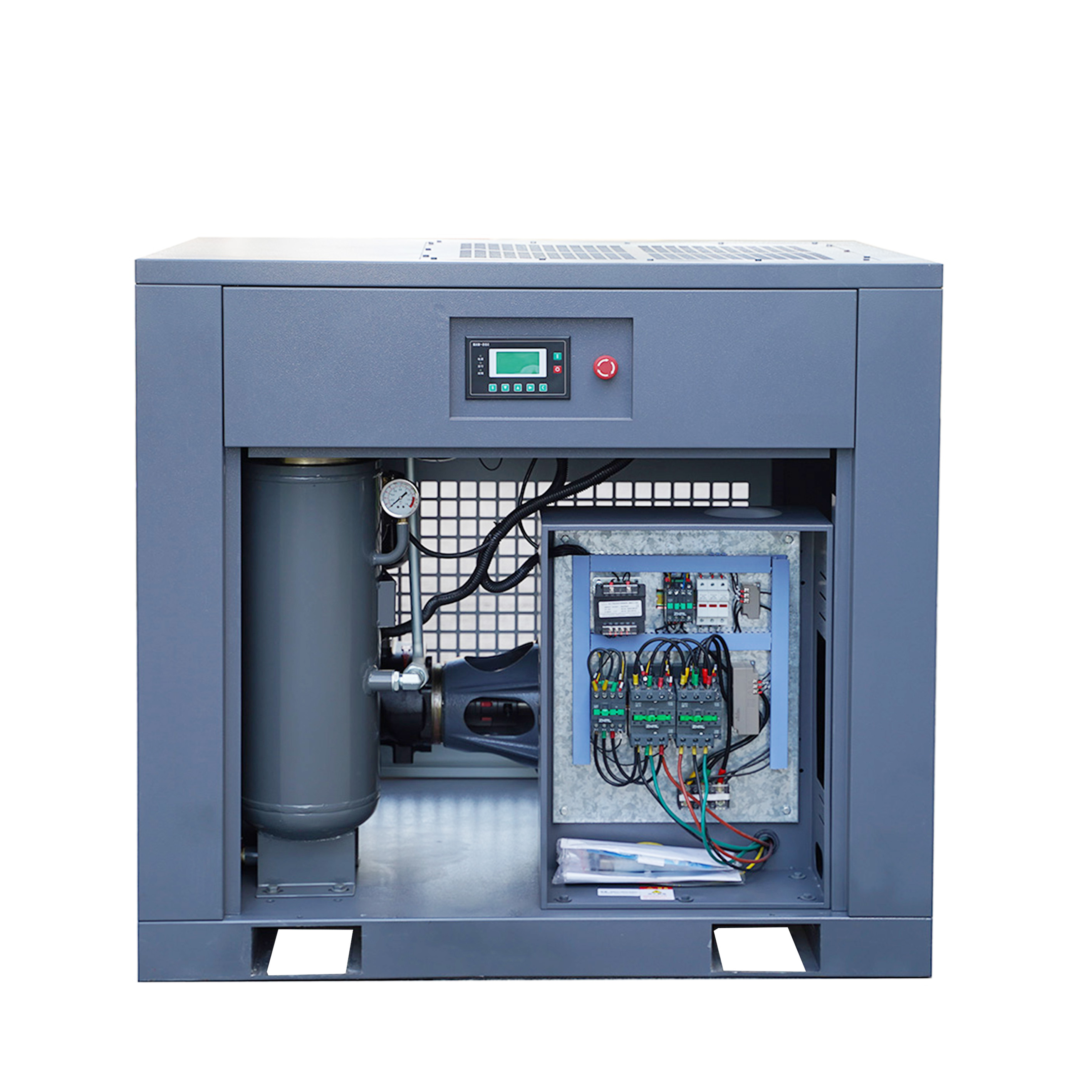
Variable frequency air compressor achieve precise energy saving through the linear relationship between "speed and power": Partial load energy saving: When the air consumption drops to 70% of the rated value, the energy consumption of variable frequency models can be reduced by 30%; if it drops to 50%, the energy saving rate reaches 45%.
Eliminating unloading operation: Fixed frequency machines enter unloading state after the pressure reaches the standard, but still consume 20%-30% of the rated power; variable frequency machines directly reduce the speed, with almost no unloading loss.
Application Scenarios: From General Manufacturing to High-End Sectors
Fixed-frequency air compressor still occupy a basic market share among small and medium-sized enterprises due to their cost advantage:
Suitable Scenarios: Industries with small fluctuations in air consumption and low requirements for pressure stability, such as building materials, textiles, and general machinery processing.
Limitations: In scenarios requiring frequent start-stop or high pressure accuracy, the equipment wears out quickly and maintenance costs are high.
Variable frequency air compressor have become the preferred choice for high-end manufacturing:
Precision manufacturing: Industries such as automotive parts and 3C electronics require air pressure fluctuations of ≤±0.1 bar, and variable frequency compressors can ensure product yield.
Pharmaceuticals & Food: Oil-free variable frequency screw compressors can provide Class 0 clean air, meeting GMP certification requirements.
Energy Management: Multi-machine control via an IoT system allows for dynamic adjustment of air supply strategies based on production plans, further optimizing energy consumption.
Industry Trends: Policy-Driven Market Transformation
With the implementation of GB19153-2019 "Minimum Allowable Values of Energy Efficiency and Energy Efficiency Grades for Positive Displacement Air Compressors," Class 1 energy-efficient variable frequency air compressor have become the market mainstream. Driven by both policy and market forces, the industry is showing the following trends:
Accelerated Technological Iteration: The integration of permanent magnet synchronous motors and two-stage compression technology further improves the energy efficiency of variable frequency air compressors. One brand's model achieved an annual energy saving rate of 31.5% in a brewery application.
Service Model Innovation: Manufacturers have launched "Energy Saving Contracts" (EMCs), allowing customers to pay based on energy savings without initial investment, lowering the barrier to entry for transformation.
Intelligent Upgrades: Variable frequency air compressor integrating AI algorithms can predict air demand and adjust operating parameters in advance, achieving "zero-fluctuation" air supply.
The Inevitable Path to Energy-Saving Retrofits
Under the dual-carbon goals, variable frequency air compressors have been upgraded from an "optional solution" to a "must-have configuration." For enterprises with annual power consumption exceeding 1 million KWh, the payback period for retrofit investments is typically within 1-2 years. As a steel company executive stated, "Variable frequency retrofits are not only about energy saving, but also an investment in production stability." With the continuous decline in technology costs, this industrial energy-saving revolution led by variable frequency air compressor is reshaping the green DNA of Chinese manufacturing.

