

In industrial production, the compressed air generated by screw air compressors serves as the core power source for pneumatic equipment, spray painting, precision machining, food and pharmaceutical processing, and various other operations. Many enterprises frequently encounter a common issue: the moisture content in their compressed air exceeds acceptable limits, leading to severe water discharge at the end of their piping systems. Although moisture in the air may seem insignificant, it can insidiously erode production efficiency, shorten equipment lifespan, and cause product defect rates to skyrocket; it is a "hidden hazard" in industrial production that is all too easily overlooked.
Jiangxi Aisa Compressor Co., Ltd. has dedicated years to the research, development, and manufacturing of screw air compressors, as well as the provision of ancillary solutions. Addressing the issue of moisture in compressed air across various industries—and taking into account diverse operating conditions—we have developed a comprehensive solution system. This system spans root-cause analysis, equipment integration, system optimization, and routine maintenance, helping enterprises to thoroughly resolve the challenge of excessive moisture in compressed air and ensure a stable, high-quality air supply.
I. The Core Hazards of Excessive Moisture in Compressed Air
Many enterprises fail to attach sufficient importance to the issue of moisture in compressed air; allowing this problem to persist unchecked over time can trigger a cascade of production failures and directly inflate production costs:
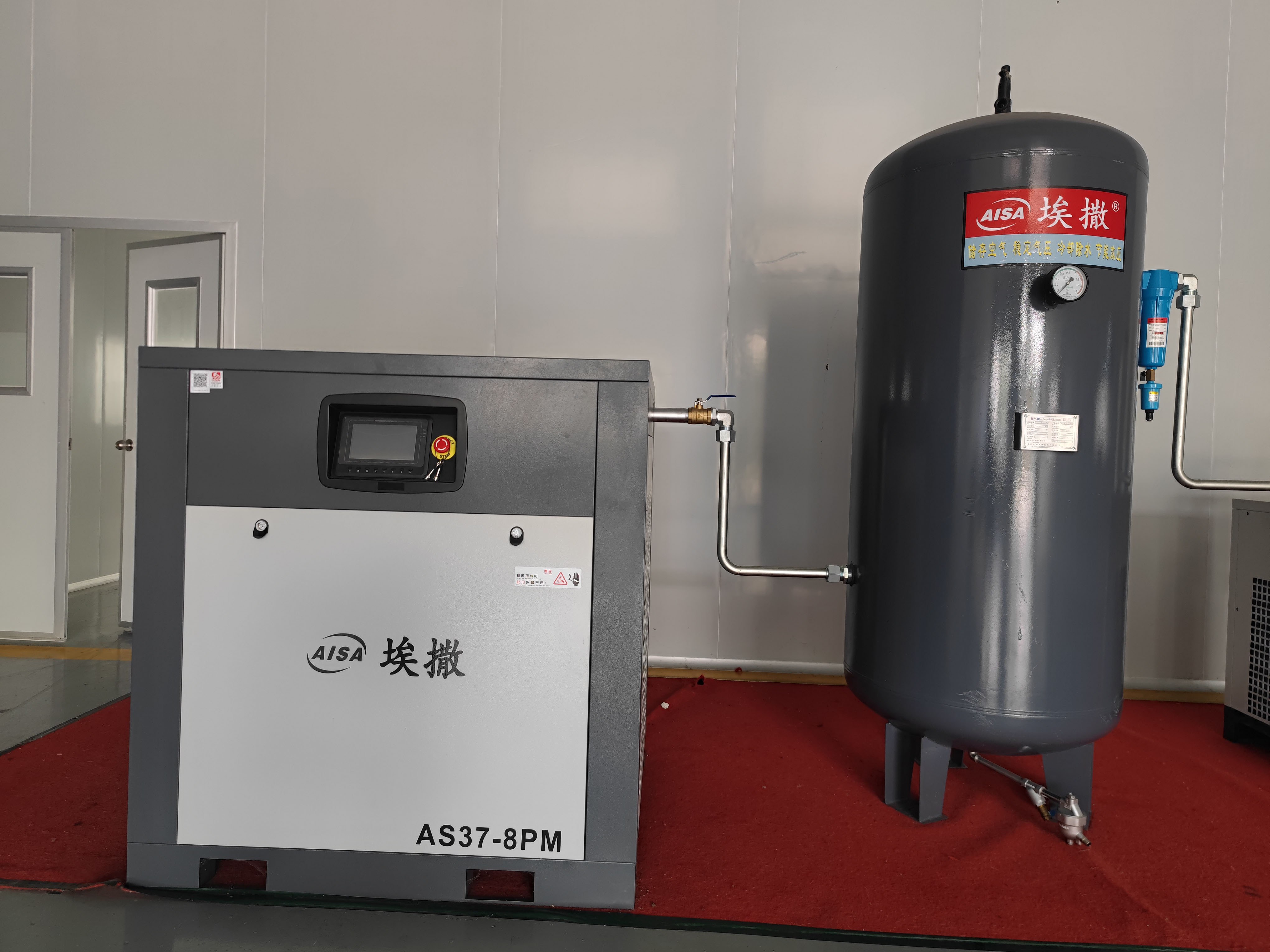
Equipment Corrosion and Damage: Humid air contains significant amounts of moisture, which can damage core components such as the air compressor's main unit, lubricating oil, and oil separator elements. It also causes oxidation and rust on the inner walls of metal piping. Over time, accumulated water can clog pipelines; in low-temperature winter environments, this accumulated water may freeze, directly causing pipe blockages, equipment seizure, and total failure—thereby drastically shortening the service life of pneumatic equipment.
Product Quality Defects: In the spray painting industry, moisture can lead to paint blistering, peeling, and uneven color distribution. In precision electronics and instrument manufacturing, it can cause component moisture damage, short circuits, and deviations in precision. In the food and pharmaceutical sectors, moisture fosters bacterial growth, rendering products non-compliant with clean production standards and resulting in the mass scrapping of entire product batches.
Decreased Production Efficiency: Moisture dilutes pneumatic lubricating oil—potentially causing severe emulsification—which increases internal friction within equipment, leads to sluggish operation and insufficient power output, and triggers frequent downtime failures, thereby severely disrupting the continuity of production line operations.
Frequent Secondary Failures: Mixtures of oil, water, and impurities can clog filters and air drying equipment, causing pressure instability within the air compressor system, increasing energy consumption, and driving up ongoing maintenance and operational costs.
II. Primary Causes of Excessive Moisture in Compressed Air
To thoroughly resolve the issue of moisture in compressed air, one must first identify the root causes. In industrial settings, the core reasons for excessive moisture can be broadly categorized into four main groups:
1. Inherent Physical Properties of Air Compression
Natural air inherently contains a significant amount of water vapor. When an air compressor compresses this air, its density increases drastically, causing the saturation level of the water vapor to drop sharply; consequently, the excess moisture rapidly condenses into liquid water. The higher the ambient humidity—a phenomenon particularly evident during the plum rain season in Southern China or in humid industrial environments—the greater the amount of moisture that precipitates out after compression. This constitutes the fundamental physical basis for the presence of moisture in compressed air.
2. Operational Anomalies in Air Compressor Equipment
Malfunctions within the cooling systems of screw air compressors are a key trigger for excessive water accumulation. When air demand is low, the moisture drawn into the compressor mixes with the lubricating oil. Because the low air demand prevents the oil temperature from rising sufficiently—specifically, remaining below 75°C (the temperature at which water begins to evaporate)—the moisture trapped within the lubricant cannot evaporate. This moisture accumulates internally over time, eventually emulsifying the oil and corroding the main compressor unit, which can ultimately lead to the main unit seizing up due to rust.
3. Mismatched Post-Processing Equipment Configuration
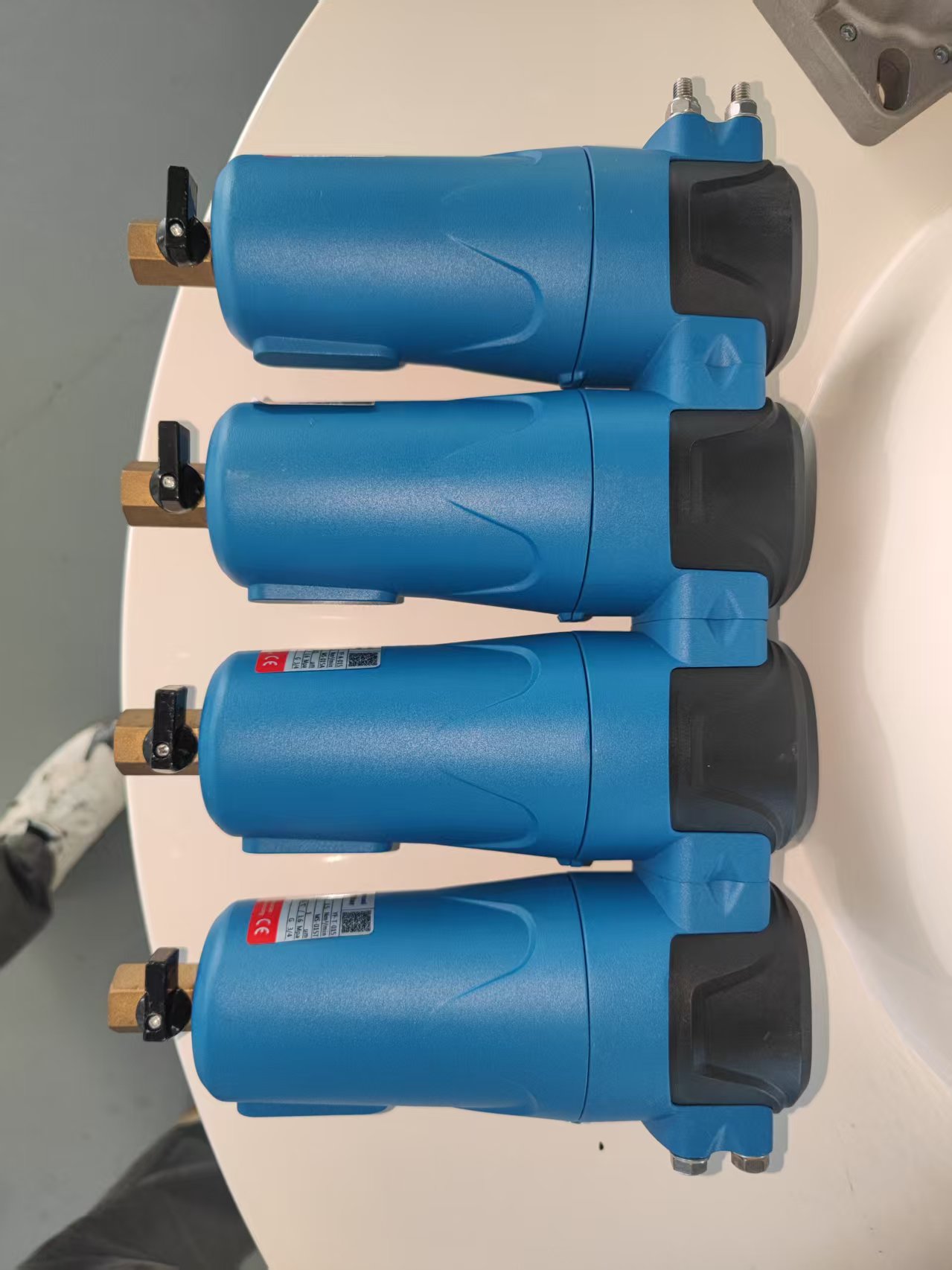
Many enterprises install only the air compressor itself, failing to pair it with appropriate drying and filtration equipment. Alternatively, the selected equipment may be undersized or possess insufficient processing capacity to match the compressor's rated output; under high-load operating conditions, the equipment's water-removal capability effectively fails. Furthermore, in some enterprises, drying equipment has aged or the adsorbent materials have lost their efficacy, resulting in a complete loss of water-removal functionality.
4. Improper Piping Layout and Drainage Design
Compressed air pipelines may lack the necessary gradient (slope), low-lying sections may lack drainage points, or pipelines may be excessively long without segmented drainage provisions; these flaws lead to the prolonged retention and accumulation of condensate. Additionally, issues such as delayed manual drainage, clogged drainage valves, or malfunctioning automatic drainers prevent accumulated water from being discharged in a timely manner, causing moisture to repeatedly circulate through the air stream.
III. A Comprehensive and Highly Efficient Solution for Excessive Moisture in Compressed Air
Based on the varying requirements for air source dryness across different industries, Jiangxi Aisa has developed a solution characterized by tiered adaptation and precision-targeted treatment. This approach balances cost-effectiveness with practicality, making it suitable for a wide range of scenarios—including general industrial applications, precision manufacturing, and clean production environments.
1. Basic Optimization: Rapid, Zero-Cost Improvements
Standardized, Regular Drainage: Consistently drain air receivers and filters on a daily basis; increase drainage frequency during the rainy season or periods of high-load production. Replace old manual drain valves with electronic automatic drainers to prevent human error—such as missed or forgotten drainage—and to completely eliminate issues related to drain blockages.
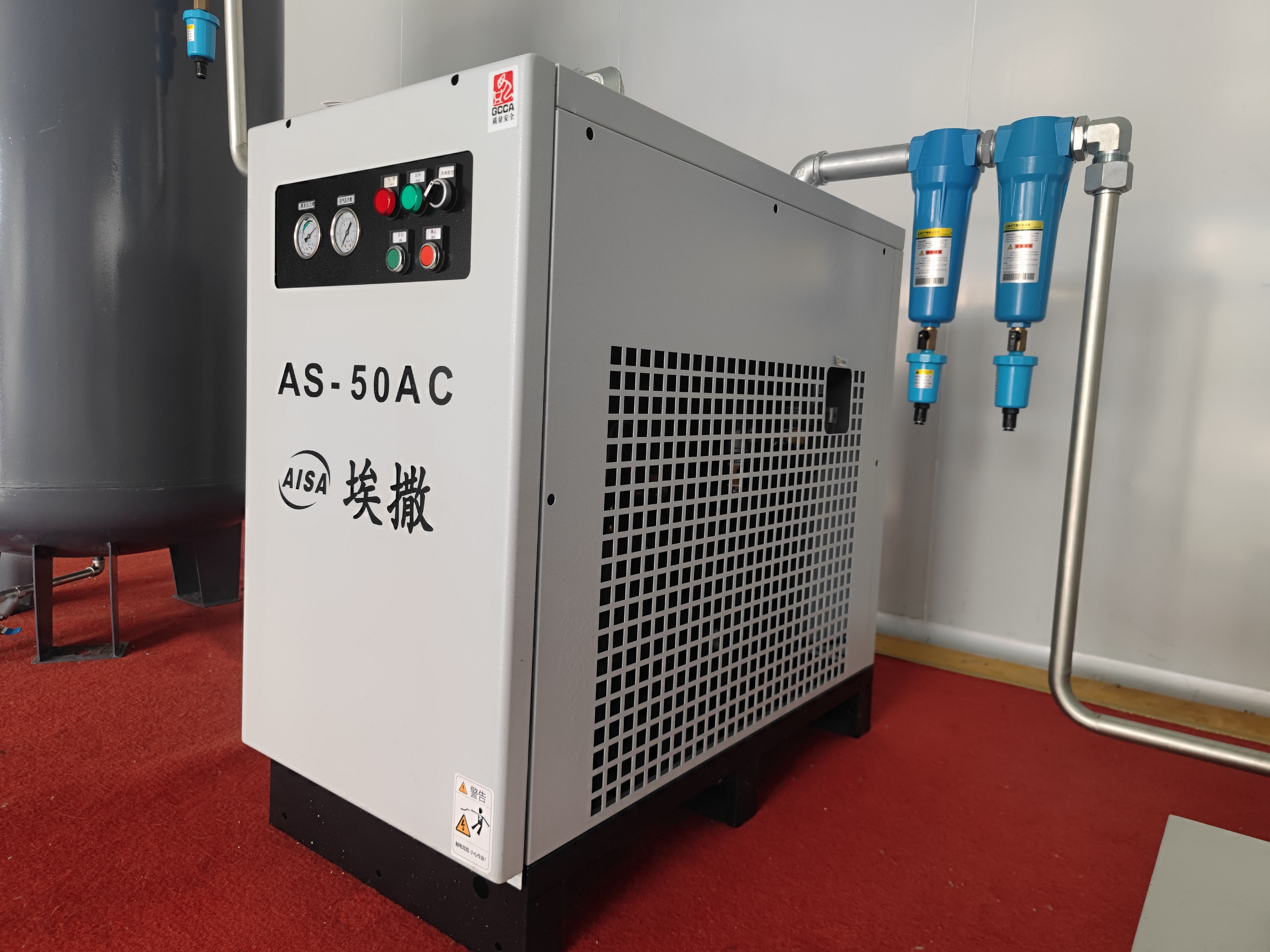
2. Intermediate Water Removal: Utilizing Refrigerated Air Dryers
For scenarios with moderate requirements for air source dryness—such as mechanical processing, pneumatic tooling, general spray painting, and packaging equipment—refrigerated air dryers offer a highly cost-effective solution. Their operating principle involves using a refrigeration system to cool compressed air down to 2–10°C, causing water vapor to rapidly condense into liquid water, which is then thoroughly separated and discharged. This process stabilizes the pressure dew point and satisfies the requirements of the vast majority of conventional industrial production applications.
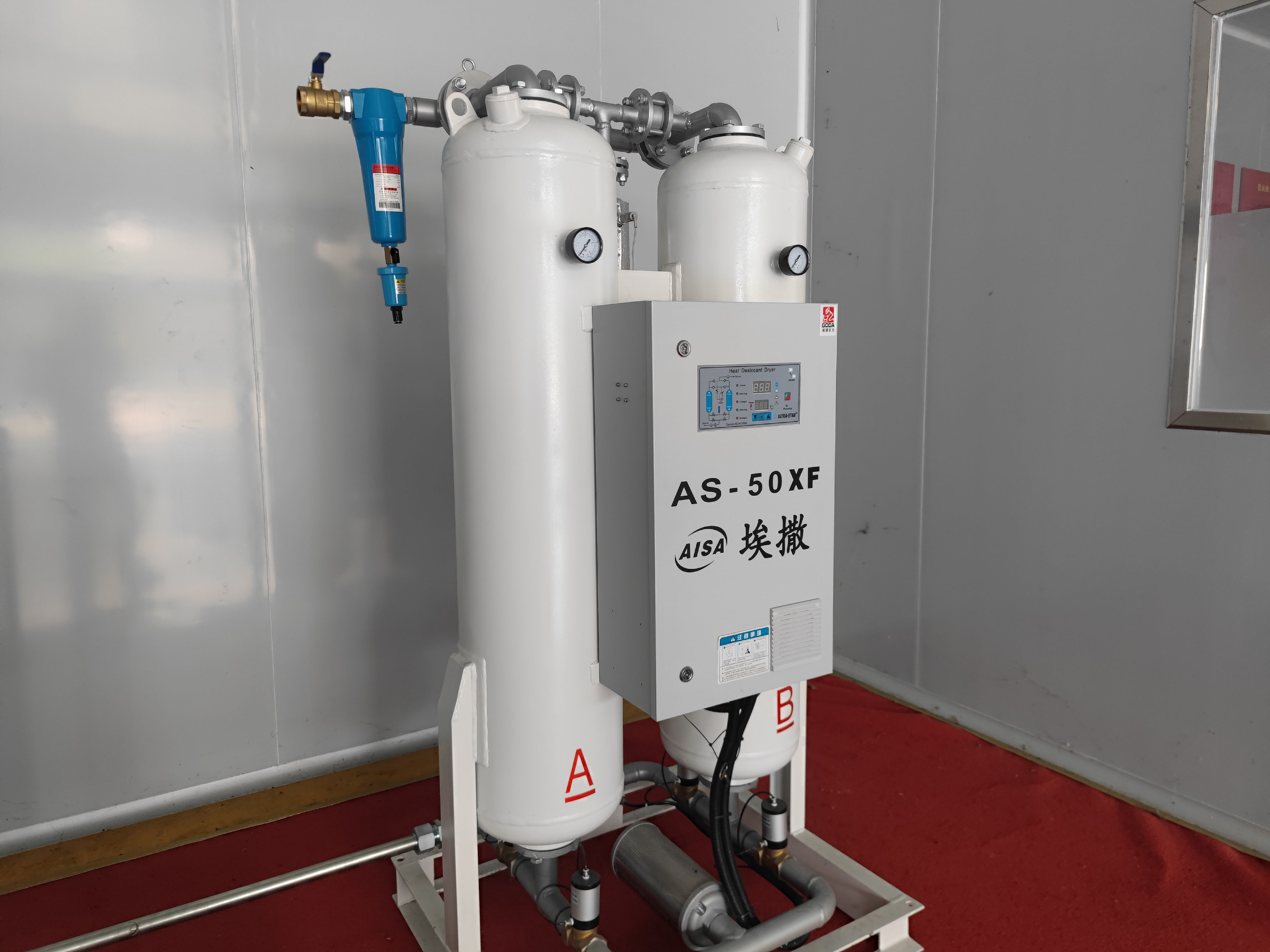
3. Advanced Water Removal: Deploying Adsorption Air Dryers
For industries with extremely stringent requirements regarding air source purity and dryness—such as precision electronics manufacturing, pharmaceuticals and food processing, high-end spray painting, and instrumentation—the addition of adsorption air dryers is essential. These devices utilize molecular sieves or activated alumina to adsorb trace amounts of water vapor from the air, achieving a pressure dew point ranging from -40°C to -70°C. This completely eliminates residual trace moisture, ensuring the output of ultra-dry compressed air.
IV. Choose Professional Equipment to Resolve Air Source Moisture Issues at the Root
For most enterprises, excessive moisture in compressed air stems from core issues such as a mismatch between the air compressor and downstream treatment equipment, poor equipment quality, or a lack of professionalism in the customized system design. Ordinary, low-cost equipment often suffers from poor heat dissipation and low water-removal efficiency; while seemingly cost-effective in the short term, it leads to frequent equipment failures, product spoilage, and skyrocketing energy consumption in the long run—ultimately resulting in a net loss.
Excessive moisture in compressed air is rarely the result of a single equipment failure; rather, it is a multifaceted problem arising from the interplay of environmental factors, equipment performance, system configuration, and operational maintenance practices. Minor water accumulation can be remedied through optimized maintenance and standardized drainage procedures; however, moderate to severe moisture issues require a comprehensive cure—achieved through the deployment of appropriately matched drying equipment, a logical system layout, and a professionally customized solution.

