

In industrial production, screw air compressors serve as indispensable sources of compressed air; their operational efficiency and energy consumption costs directly impact an enterprise's production output and operating expenses. Permanent magnet variable frequency (PMVF) air compressors are gradually displacing traditional fixed-frequency models, becoming the preferred choice for procurement across various industries. Today, we will conduct a detailed breakdown of the core advantages that PMVF air compressors hold over standard fixed-frequency units, helping industrial enterprises clearly understand the differences between the two and select the air compressor equipment best suited to their specific production requirements.
As a professional manufacturer of screw air compressors, Jiangxi Aisa has dedicated years of expertise to the industry. We have witnessed the iterative evolution of PMVF technology within the air compressor sector and, through numerous client case studies, have validated its significant advantages compared to standard fixed-frequency models. From energy consumption and operational stability to adaptability and long-term maintenance, PMVF compressors deliver comprehensive cost reductions and efficiency gains, empowering enterprises to lower production costs and boost productivity.
I. Energy Conservation and Cost Reduction: Saving Enough in One Year to Pay for the Equipment Itself
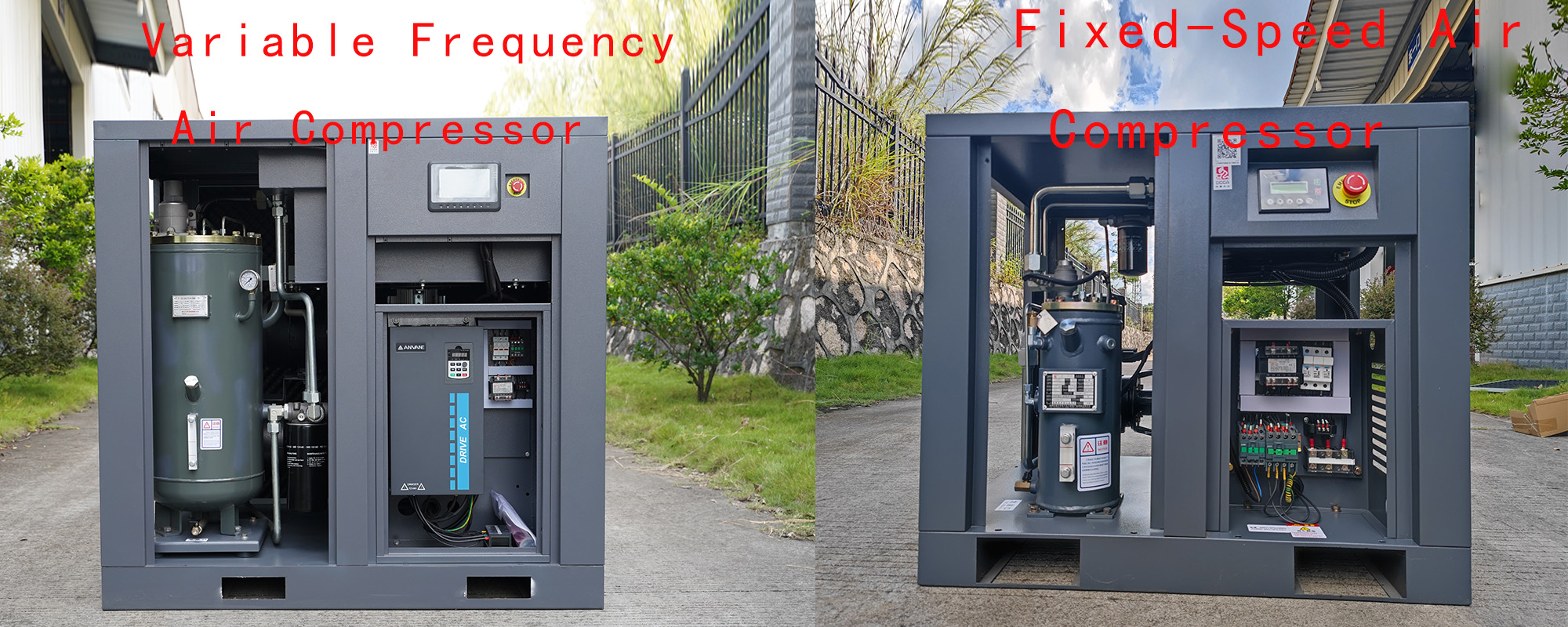
Energy conservation is the most prominent advantage of PMVF air compressors—and the primary reason enterprises choose them—standing in stark contrast to standard fixed-frequency models. Standard fixed-frequency air compressors operate at a fixed motor speed; regardless of the actual demand for compressed air, the motor continuously runs at its rated speed. Any excess compressed air is subsequently vented through an unloader valve, resulting in significant electrical energy waste. This issue is particularly prevalent in industrial settings where air demand often fluctuates, leading to the common "overkill" phenomenon—akin to using a "large horse to pull a small cart"—in fixed-frequency systems.
In contrast, PMVF air compressors are equipped with high-efficiency permanent magnet synchronous motors paired with advanced variable frequency control systems. These systems automatically adjust the motor speed based on actual air flow demand, thereby enabling "on-demand air supply." When air demand decreases, the motor speed—and consequently, energy consumption—drops accordingly; conversely, when demand rises, the speed automatically increases, ensuring a stable air supply while minimizing electrical energy waste. (For example: Under identical operating conditions, a PMVF air compressor can save 20% to 40% more energy than a standard fixed-frequency model. For industrial enterprises operating an average of eight hours or more per day, the electricity savings generated within a single year can directly offset the entire purchase cost of a small-scale air compressor—and for larger units, the potential savings are even greater.
II. Stable Operation: Enhanced Reliability of Air Supply Quality
Industrial production places extremely high demands on the pressure stability and purity of compressed air. Any fluctuation in air source pressure can lead to issues such as production interruptions and substandard product quality. Conventional fixed-frequency air compressors, due to their fixed rotational speed, can only regulate pressure through a "load-unload" cycle. This approach is prone to pressure fluctuations (typically ranging from 0.1 to 0.2 MPa), which not only disrupt the normal operation of downstream pneumatic equipment but also shorten the service life of the air compressor itself.
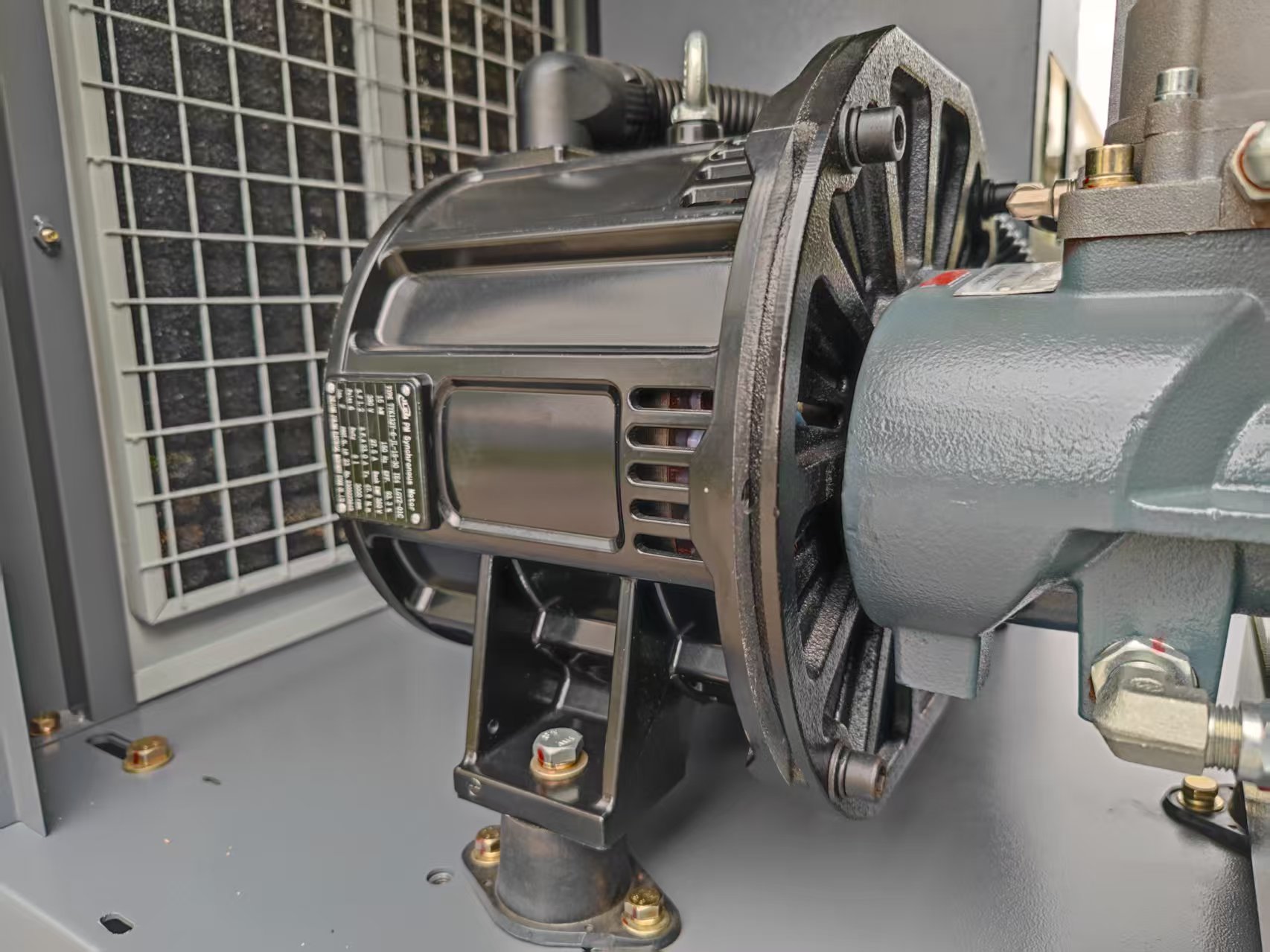
Permanent magnet variable frequency (PM-VF) air compressors utilize closed-loop variable frequency control technology to keep pressure fluctuations within a narrow range of ±0.01 MPa. This ensures a stable and uniform air supply pressure, making them ideally suited for industries with stringent air quality requirements (such as food processing, pharmaceuticals, electronics, and textiles). Furthermore, the permanent magnet synchronous motor operates with minimal vibration and low noise levels (5–10 dB lower than conventional fixed-frequency units). This reduces operational interference within the production environment and minimizes wear on internal components, thereby further enhancing operational stability. Additionally, PM-VF air compressors employ a "soft start" mechanism upon startup; this not only safeguards the stability of the power grid but also extends the service life of core components, such as the compressor air-end and motor.
III. Convenient Maintenance: Significantly Reduced Long-Term Costs
For industrial enterprises, the long-term costs associated with equipment maintenance and operation are a critical consideration. Conventional fixed-frequency air compressors, due to their rigid operating mode, experience accelerated component wear. This necessitates the periodic replacement of parts—such as motors, bearings, and unloading valves—and entails a high frequency of maintenance, resulting in elevated operational and maintenance costs. Moreover, the frequent "load-unload" cycling inherent to fixed-frequency units increases the likelihood of equipment failure, thereby compromising production continuity.
In contrast, PM-VF air compressors operate at a smooth, steady rotational speed, resulting in minimal component wear. This allows for extended maintenance intervals, thereby significantly reducing both the frequency and cost of maintenance procedures. Furthermore, the variable frequency control system features intelligent monitoring capabilities, enabling real-time surveillance of the equipment's operational status (including pressure, temperature, and energy consumption). By providing timely alerts regarding potential faults or hazards, the system facilitates prompt intervention by maintenance personnel, effectively preventing production interruptions caused by equipment failure.
IV. How to Choose the Right Air Compressor for Your Needs
When comparing standard fixed-frequency air compressors with permanent magnet variable-frequency air compressors, both types possess distinct advantages. Permanent magnet variable-frequency compressors are highly favored by the market due to their superior performance in areas such as energy conservation, reduced consumption, operational stability, adaptability, and lower maintenance costs. However, fixed-frequency compressors are by no means without merit; characterized by a simple structure and fewer electronic components, they are well-suited for harsh operating conditions—such as those found in mining sites, outdoor settings, or other demanding industrial environments. Ultimately, each model offers its own specific set of corresponding advantages.

