

On May 4, 2026, Jiangxi Aisa Compressor Co., Ltd. reached a significant developmental milestone: 300 medium-to-large screw vacuum pumps officially rolled off the production line and were delivered in bulk to a leading domestic electric vehicle brand. This collaboration serves not only as a concentrated demonstration of Aisa’s technical prowess and production capacity but also marks the successful entry of domestically produced high-end vacuum equipment into the core manufacturing supply chain of the new energy vehicle (NEV) industry. It represents a qualitative leap—transitioning from general-purpose equipment to highly sophisticated, precision-engineered components—and adds another significant chapter to the rise of China's domestic industrial equipment sector.
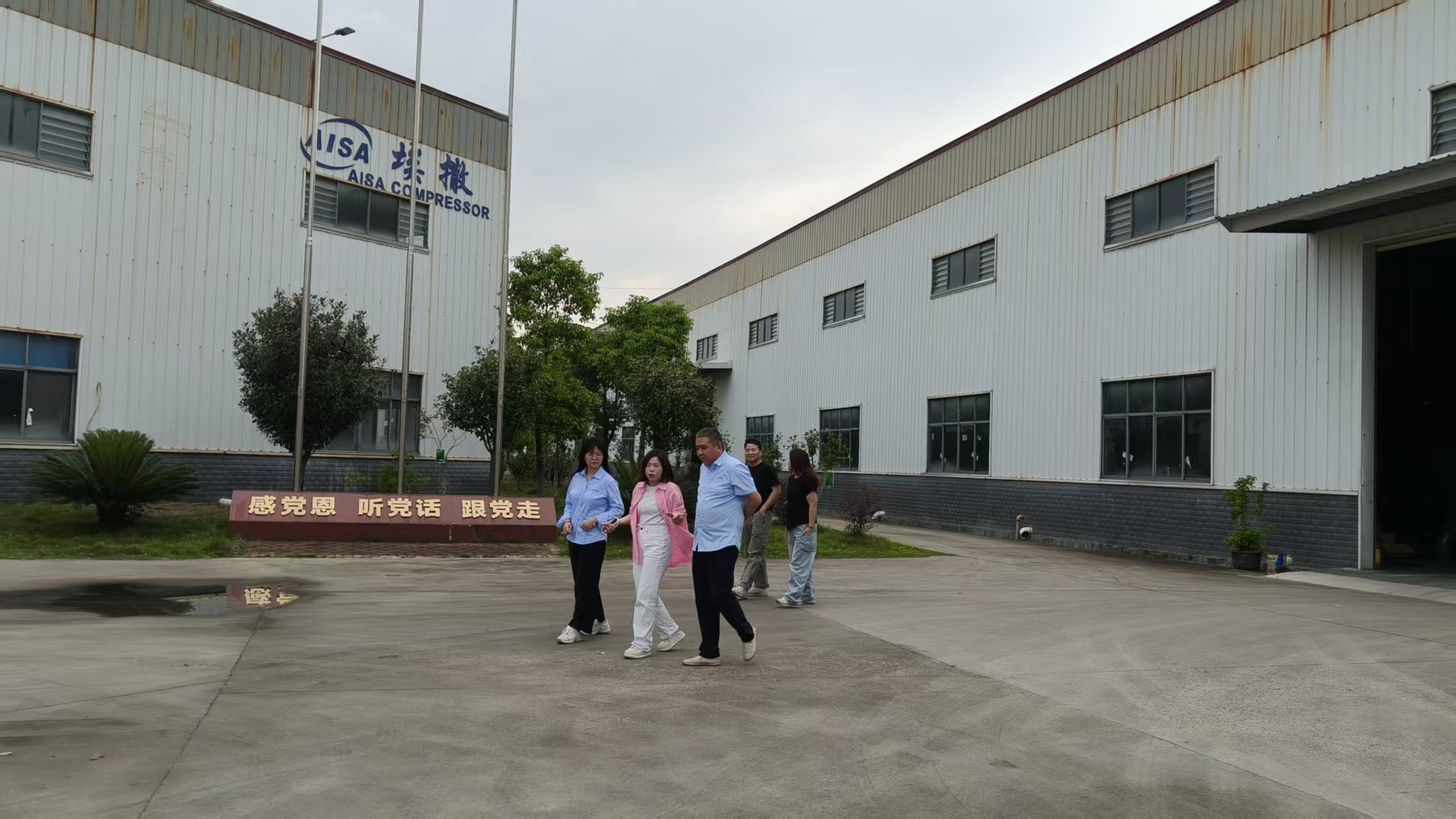
Eight Years of Dedicated Cultivation: Aisa’s Moment of Breakthrough
Established in 2018, Jiangxi Aisa Compressor Co., Ltd. is situated in the Shipai Industrial Park in Xunwu County, Ganzhou City, Jiangxi Province. It is a specialized manufacturer of compressors and vacuum equipment, integrating R&D, design, production, and sales. Since its inception, the company has dedicated itself to the field of fluid machinery. Drawing upon advanced European design concepts and exquisite craftsmanship, Aisa has assembled a technical R&D team of over 50 professionals, established six modern production and assembly lines, and built a comprehensive quality control system. From its early focus on the R&D of air compressors to its subsequent expansion into the vacuum equipment sector, Aisa has consistently placed technological innovation at its core. Over the years, thanks to the stable, reliable, efficient, and energy-saving characteristics of its products, Aisa has cultivated an excellent reputation within the general machinery market, establishing a sales and service network that spans the entire country. However, the company did not rest on its laurels; instead, it set its sights on the new energy vehicle sector—a field characterized by higher technical barriers and broader market prospects. The production of core NEV components—such as power batteries and electric drive systems—imposes stringent requirements on the cleanliness, stability, and vacuum levels of the equipment used; for a long time, this specialized market segment had been monopolized by a handful of international brands. After three years of intensive technical research and development, Aisa achieved a comprehensive breakthrough—spanning the entire process from R&D and testing to mass production—for its medium-to-large screw vacuum pumps, thereby successfully breaking the long-standing monopoly in the high-end market. Technical Deep Dive: The Core Principles of Screw Vacuum Pumps
The medium-to-large-scale dry screw vacuum pumps delivered in this shipment represent a benchmark product embodying Essa’s core technologies. Their operating principle is rooted in screw vacuum technology, featuring a core structure comprising a pair of high-precision, conjugately meshing male and female screw rotors. These rotors rotate synchronously in opposite directions within the pump chamber, maintaining only a micron-level clearance between the rotors themselves and the chamber walls, thereby achieving truly dry and clean operation. The operational process can be clearly delineated into three continuous cyclical stages:
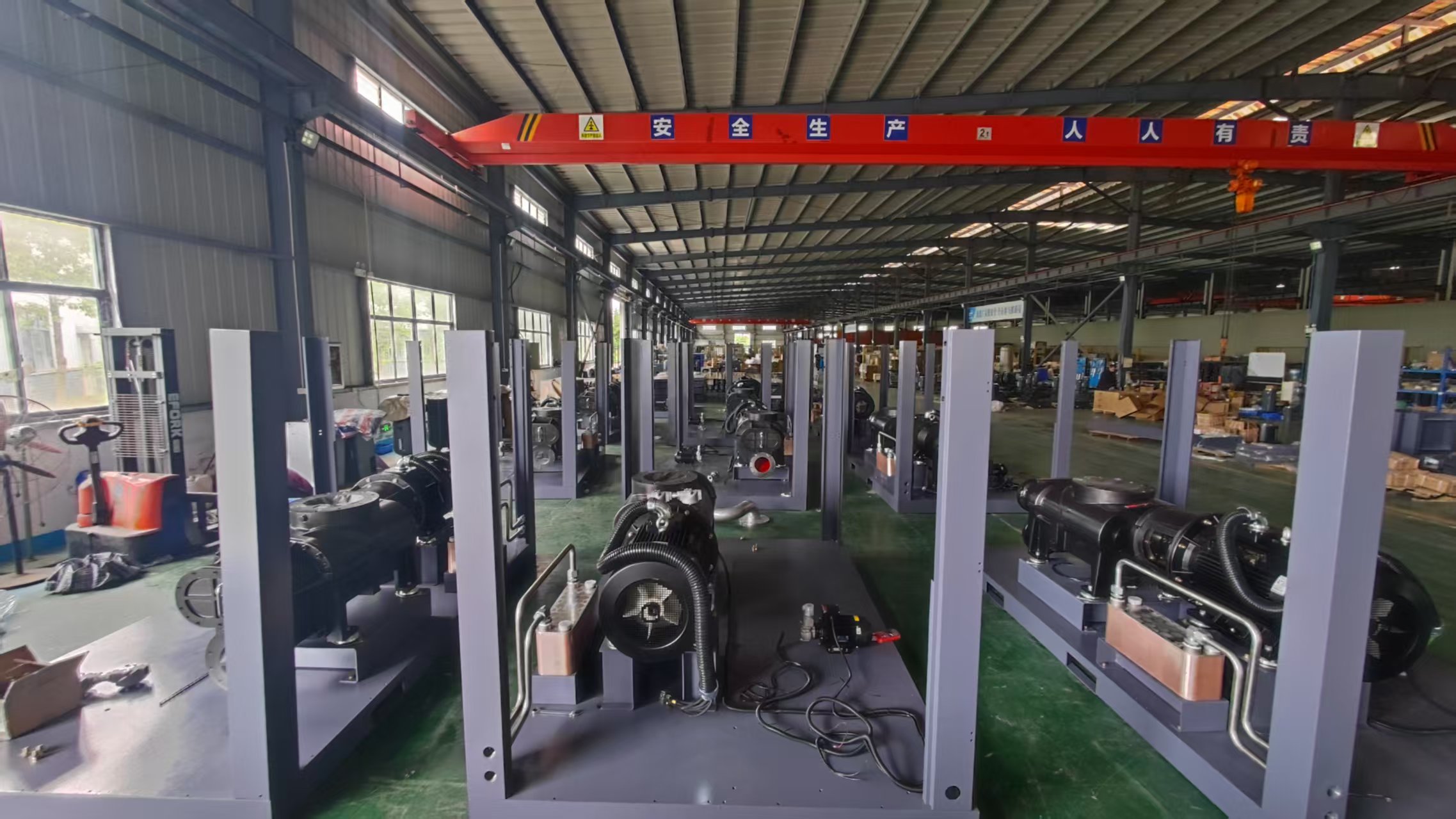
1. Intake Stage: As the screw rotors rotate, the volume between the screw threads gradually expands, creating a negative pressure environment within the pump chamber. Driven by this pressure differential, gas (such as air or process gases) from the system being evacuated is continuously drawn through the intake port into the expanding inter-thread volume. This intake process continues until the specific volume unit—the sealed pocket of gas—moves past and disengages from the intake port.
2. Compression Stage: The volume unit containing the intake gas travels along with the rotating rotors, moving from the intake side toward the exhaust side. Influenced by the rotors' conjugate tooth profiles, the convex lobes of the male rotor progressively mesh into the concave grooves of the female rotor. This action continuously reduces the volume of the sealed gas pocket, thereby gradually compressing the internal gas and steadily increasing its pressure. Essa employs a variable-pitch rotor design; the pitch of the screw threads decreases progressively from the intake end to the exhaust end, resulting in a gradually increasing compression ratio that enables the pump to efficiently achieve high vacuum levels.
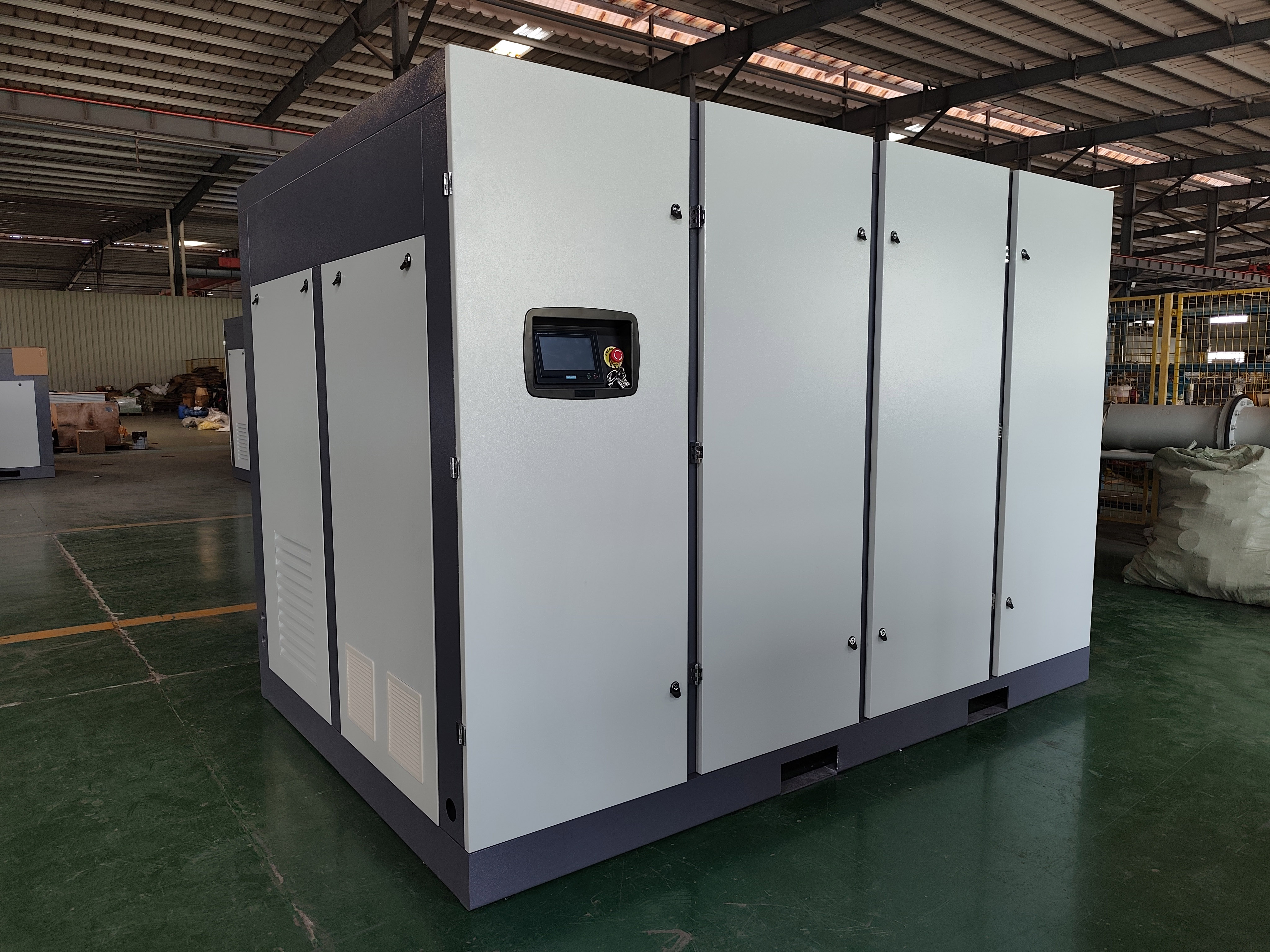
3. Exhaust Stage: When the compressed volume unit establishes a connection with the exhaust port, the high-pressure gas is rapidly expelled from the pump body, driven by the internal pressure. As the rotors continue to rotate, these three stages cycle continuously, ensuring stable and uninterrupted pumping action. Ultimately, this process establishes and maintains the highly clean vacuum environment required for production operations. Compared to traditional oil-sealed rotary vane pumps or water-ring pumps, Essa screw vacuum pumps offer key advantages such as superior ultimate vacuum levels, stable operation, low energy consumption, and extended maintenance intervals. Their ultimate vacuum level can reach below 1 Pa, with pumping speeds ranging from 100 to 1000 m³/h. This makes them ideally suited for medium-to-large-scale production scenarios, fully meeting the stringent standards required for processes such as electrolyte filling, formation, and packaging in the manufacturing of new energy vehicle batteries. Empowering New Energy: A High-End Breakthrough for Domestic Equipment
As a national strategic emerging industry, the new energy vehicle sector places critical importance on the independent control and self-reliance of core manufacturing equipment. In the power battery production process, the electrolyte injection stage requires a high-vacuum environment to eliminate bubbles within the electrolyte, thereby ensuring battery capacity consistency and cycle life; the formation stage demands a stable vacuum environment to guarantee uniform electrode interface reactions and prevent the generation of defective products. Traditional vacuum equipment is prone to issues such as oil vapor contamination, vacuum level fluctuations, and high failure rates—factors that directly compromise battery quality and production efficiency. In contrast, frequency-conversion intelligent control systems allow for the precise regulation of pumping speeds and vacuum levels, adapting seamlessly to diverse process conditions while reducing energy consumption by over 25% compared to traditional equipment. Furthermore, the non-contact operating structure minimizes wear on consumable parts, extending maintenance cycles to just once per quarter and significantly boosting the production line's effective uptime. The 300 units delivered in this batch will be fully deployed across multiple power battery production lines at a leading automotive manufacturer. These units will provide stable vacuum support for a battery production operation with an annual capacity exceeding 20 GWh, helping the client enhance product yield and reduce production costs. This collaboration marks a pivotal turning point in Aisa’s corporate history—transitioning from serving the general machinery market to becoming a core supplier for a top-tier domestic new energy vehicle manufacturer, and achieving a leap from small-to-medium batch customization to large-scale standardized delivery. The fulfillment of this 300-unit order serves not only as a strong market endorsement of Aisa’s product quality but also as concrete proof that domestically produced high-end vacuum equipment now possesses the capability to compete head-to-head with international brands.
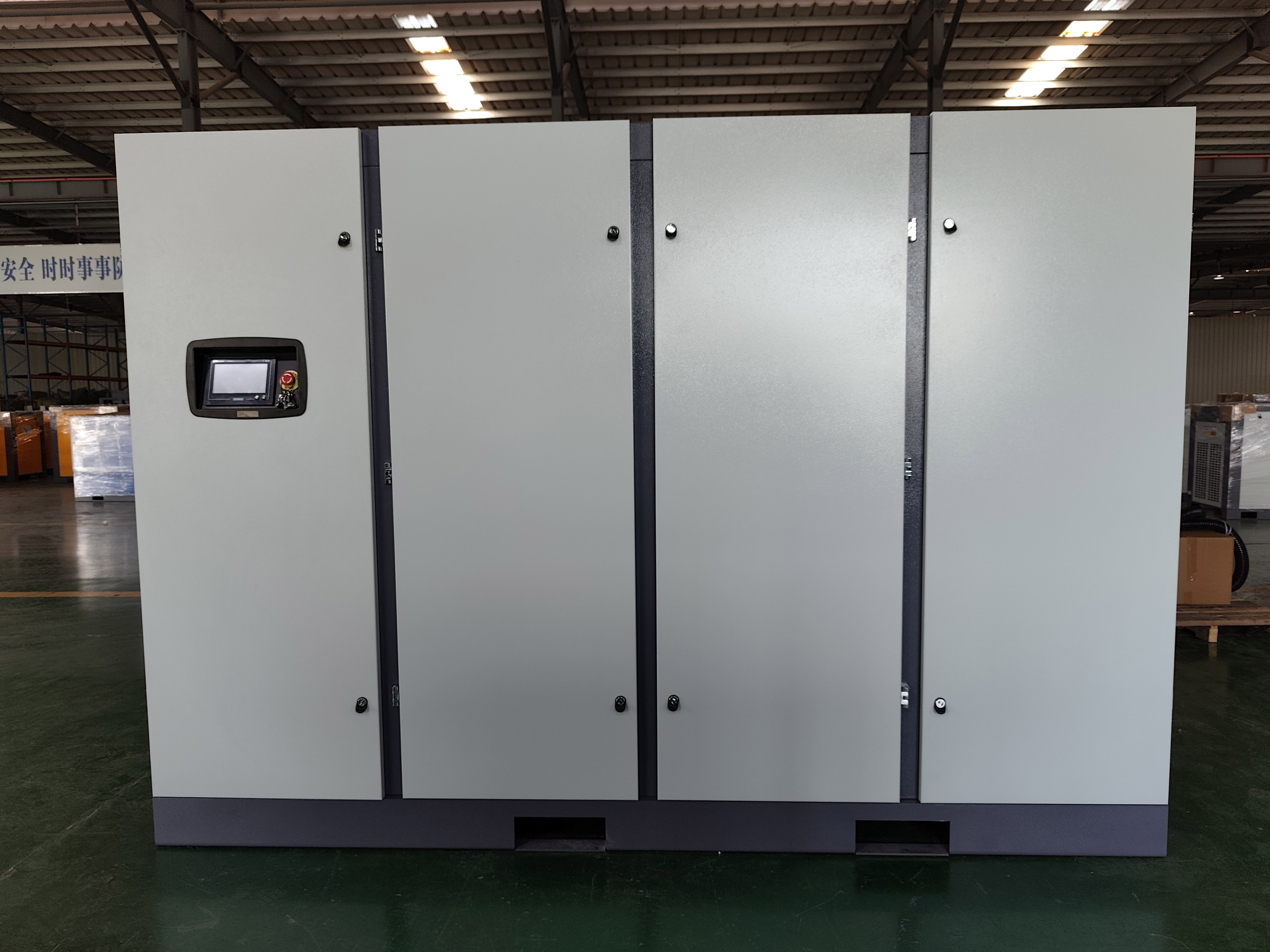
Looking Ahead: The Accelerating Rise of Domestic Industrial Equipment
Currently, my country's new energy vehicle industry is experiencing a period of rapid growth, driving a continuously rising demand for high-end manufacturing equipment. For a long time, the reliance on imported core equipment has not only increased corporate costs but also constrained the industry's independent development. Aisa’s successful delivery in this instance serves as a prime example of how domestic industrial equipment manufacturers can break through the monopoly held by high-end foreign products and successfully integrate into core industrial supply chains. Standing at this new starting point, Jiangxi Aisa Compressor Co., Ltd. has stated that it will leverage this collaboration as an opportunity to continuously increase R&D investment, optimize the performance of its screw vacuum pump product series, and expand its applications into high-end manufacturing sectors such as semiconductors, photovoltaics, and pharmaceuticals. Concurrently, the company plans to further expand its production capacity and refine its technical service system, thereby assisting more domestic enterprises in shedding their reliance on imported high-end vacuum equipment and driving the transformation of domestic industrial equipment toward high-end, intelligent, and eco-friendly manufacturing. From the production workshops in Ganzhou, Jiangxi, to the front lines of core new-energy vehicle manufacturing, the 300 screw vacuum pumps deployed there represent far more than just a guarantee of vacuum integrity for industrial production; they embody the unwavering conviction of China’s domestic equipment manufacturing sector—a commitment to overcoming challenges and pursuing independent innovation. As an increasing number of enterprises like Essa rise to prominence, domestically produced high-end equipment is destined to secure a pivotal position in the global market, injecting powerful momentum into my country’s transformation from a major manufacturing nation into a manufacturing powerhouse.

