

From Working Principles to Cost-Effectiveness: A Comprehensive Analysis of the Differences Between Two Mainstream Air Compressors
In the selection and planning of industrial compressed air systems, the choice between fixed-frequency and variable-frequency air compressors directly impacts a company's long-term operating costs and production efficiency. Based on years of market application data, the technical team at Jiangxi AISA Compressor Co., Ltd. has systematically analyzed the substantial differences between the two in terms of technical principles, energy consumption, and applicable scenarios.
I. Core Technology Differences: From "Constant Speed Operation" to "Intelligent Adjustment"
Fixed Frequency Air Compressor: Stable Output, Fixed Energy Consumption
Operating Mode: The motor operates at a constant speed, entering full load mode immediately after startup.
Pressure Control: Output pressure is adjusted through a loading/unloading mechanism.
Energy Consumption Characteristics: During unloading, the motor continues to operate at rated power, resulting in approximately 30-40% no-load loss.
Variable Frequency Air Compressor: On-Demand Adjustment, Intelligent Energy Saving
Operating Mode: The frequency converter adjusts the motor speed in real time to match actual air consumption needs.
Pressure Control: Precise pressure control is achieved by changing the speed, with a fluctuation range of ±0.1 bar.
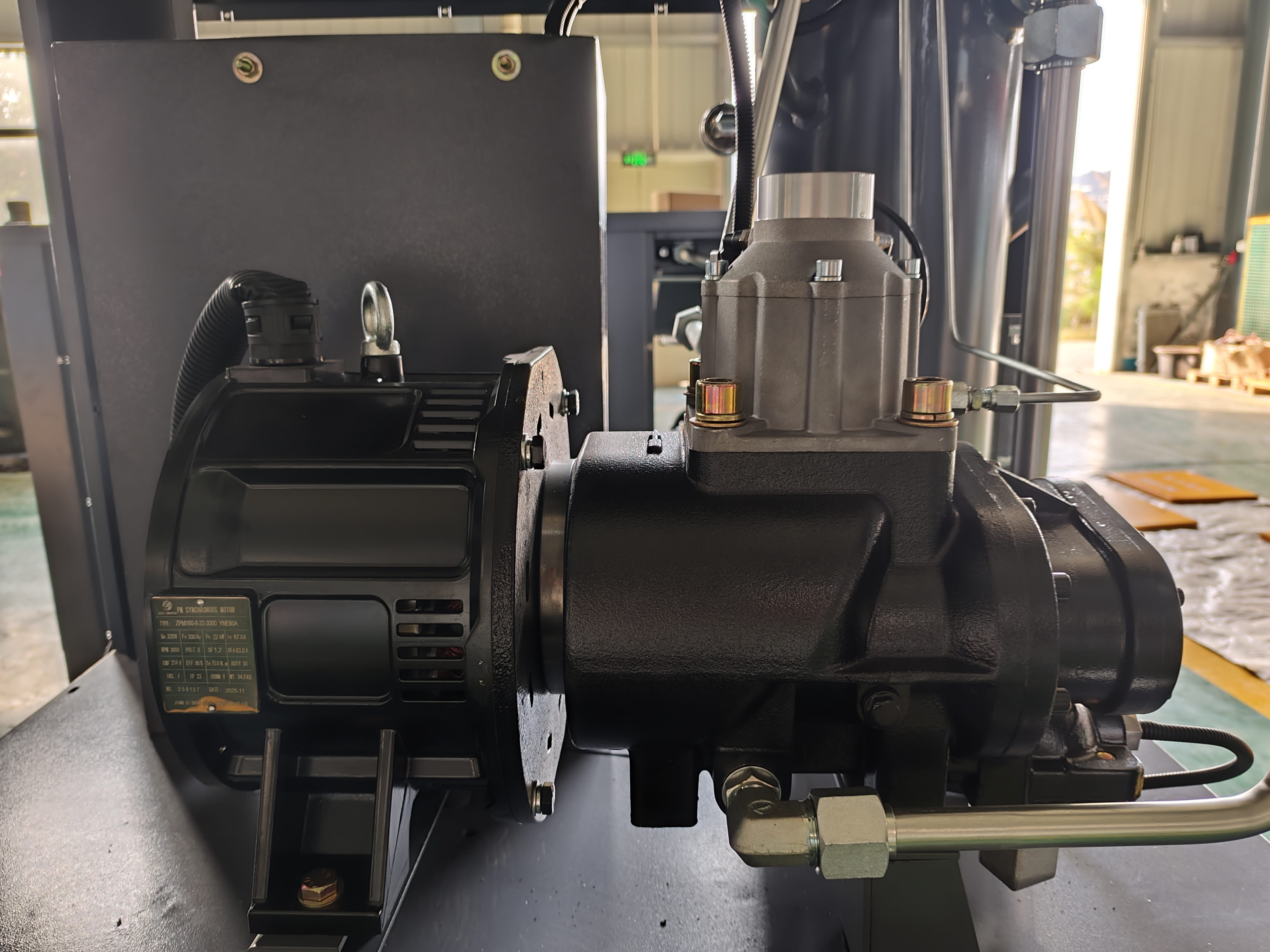
Core Components: A permanent magnet synchronous motor combined with a high-performance frequency converter achieves a comprehensive efficiency of over 95%.
II. Energy Consumption Comparison Data: Energy Saving Differences in Actual Operation
Test Case Data
In an 8-hour production cycle of a medium-sized manufacturing enterprise:
Fixed Frequency Air Compressor: Loading time 5 hours, unloading time 3 hours, measured energy consumption ratio is 78% under load, 22% under load
Variable Frequency Air Compressor: Adjusts in real time according to air demand, average load rate 65%, measured total energy consumption reduced by 32%
Long-Term Operational Economic Analysis
Based on a 55KW screw air compressor operating for 6000 hours per year:
Fixed Frequency Model: Annual power consumption approximately 330,000 kWh, electricity cost approximately 260,000 RMB (at 0.8 RMB/KWh)
Variable Frequency Model: Energy saving rate approximately 25-35%, annual electricity cost savings of 65,000-91,000 RMB
Investment Recovery Period: Typically 1.5-2.5 years, depending on the usage mode

III. Applicable Scenarios Analysis: Matching is the Optimal Choice
Optimal Application Scenarios for Variable Frequency Air Compressors
1. Large fluctuations in air consumption: Air consumption frequently changes within the range of 40%-100%
2. Continuous Operation Requirements: 24-hour uninterrupted production, requiring stable pressure.
3. Special Process Requirements: Industries with high pressure precision requirements, such as precision manufacturing and textiles.
4. Regions with High Electricity Prices: Large peak-valley electricity price differences allow for optimized operating times.
Applicable Situations for Fixed Frequency Air Compressors:
1. Stable Air Consumption: Air consumption is generally maintained above 80% of the rated flow.
2. Intermittent Operation: Daily operating time does not exceed 8 hours.
3. Budget Priority: Limited initial investment budget, lower sensitivity to long-term energy consumption.
4. Maintenance Requirements: A simpler system and lower maintenance costs are desired.
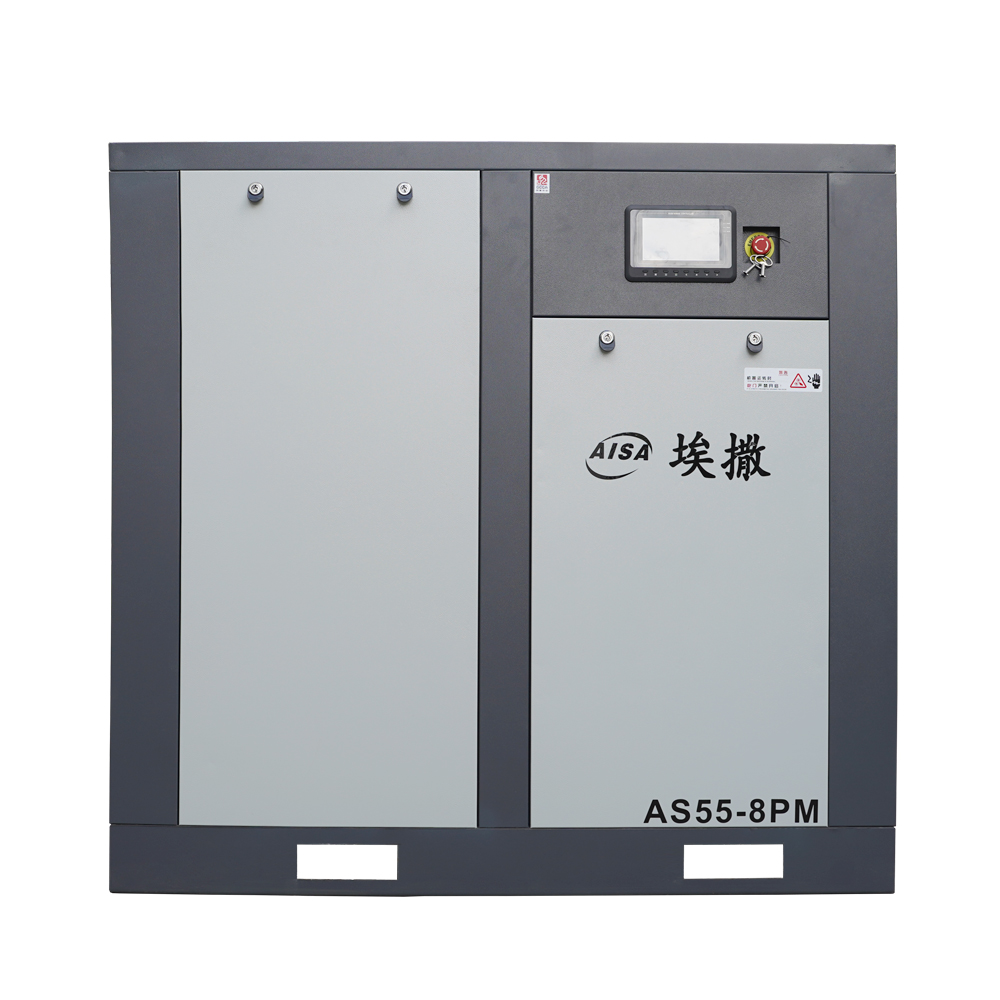
IV. Maintenance and Reliability Comparison Special Considerations for Variable Frequency Drive Systems:
Environmental Requirements: Good ventilation is required; ambient temperature below 40℃.
Maintenance Content: Regularly clean the radiator and check the capacitor status.
Lifespan: High-quality variable frequency drives are designed for a lifespan of 8-10 years.
V. Selection Decision Guidelines Key Evaluation Factors:
1. Air Consumption Analysis: Record detailed air consumption curves for 2-4 weeks.
2. Electricity Price Structure: Understand local peak-valley electricity pricing policies.
3. Investment Budget: Consider total lifecycle cost, not just purchase price
4. Environmental Conditions: Temperature and humidity conditions at the installation site
Jiangxi AISA Professional Advice
"We recommend that customers conduct a professional gas usage assessment," said a Jiangxi AISA application engineer. "Through actual monitoring, we have helped customers discover over 40% of energy-saving potential. Correct selection not only saves energy but also extends equipment lifespan."

