

Screw Air Compressors: How Do the "Power Hearts" of Industrial Production Work?
Screw air compressor are indispensable core power equipment in modern industry, renowned for their high efficiency, stability, and long lifespan. This article will systematically break down its internal structure, working principle, and explain its crucial role in factories.
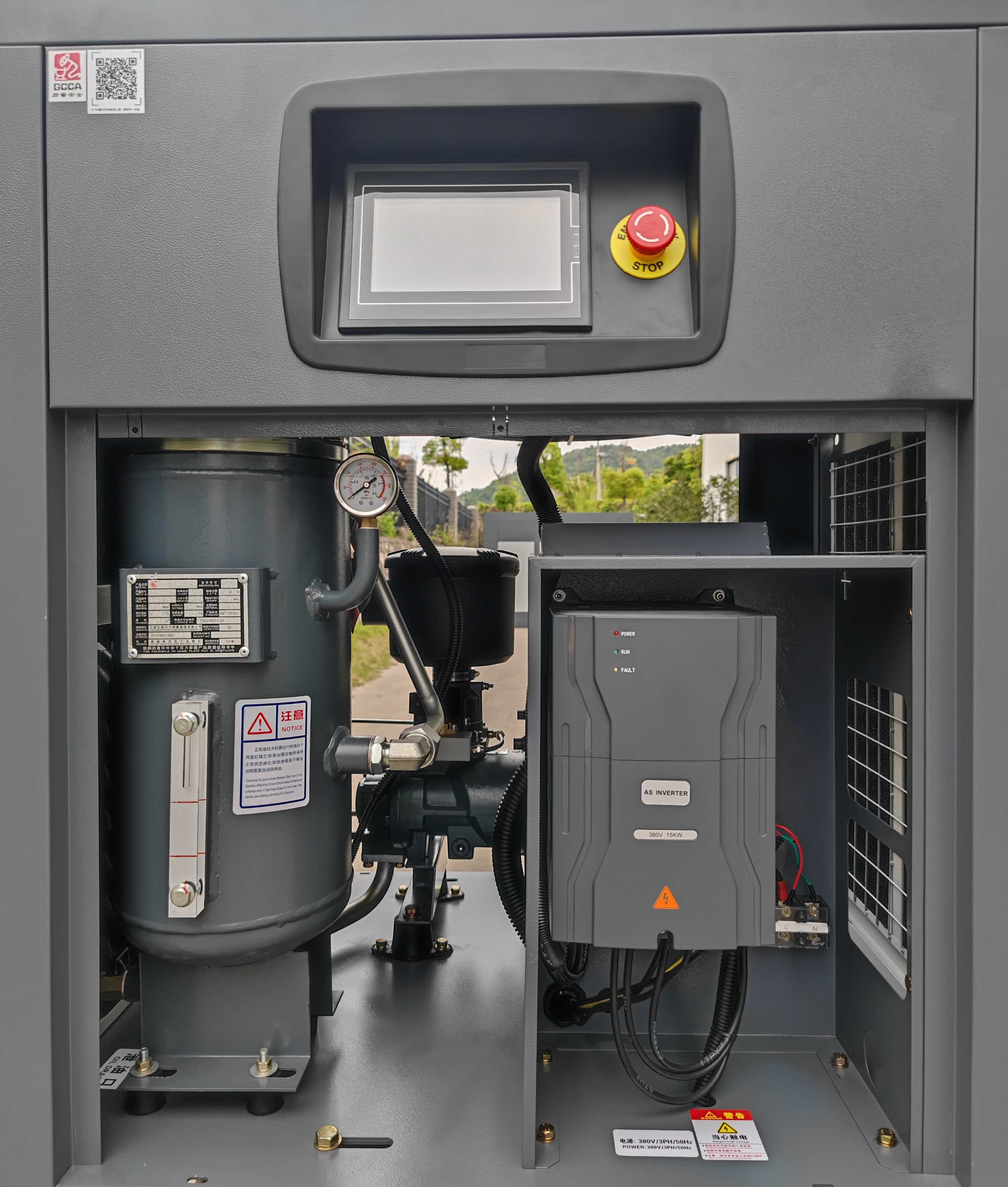
I. Core Components of a Screw Air Compressor
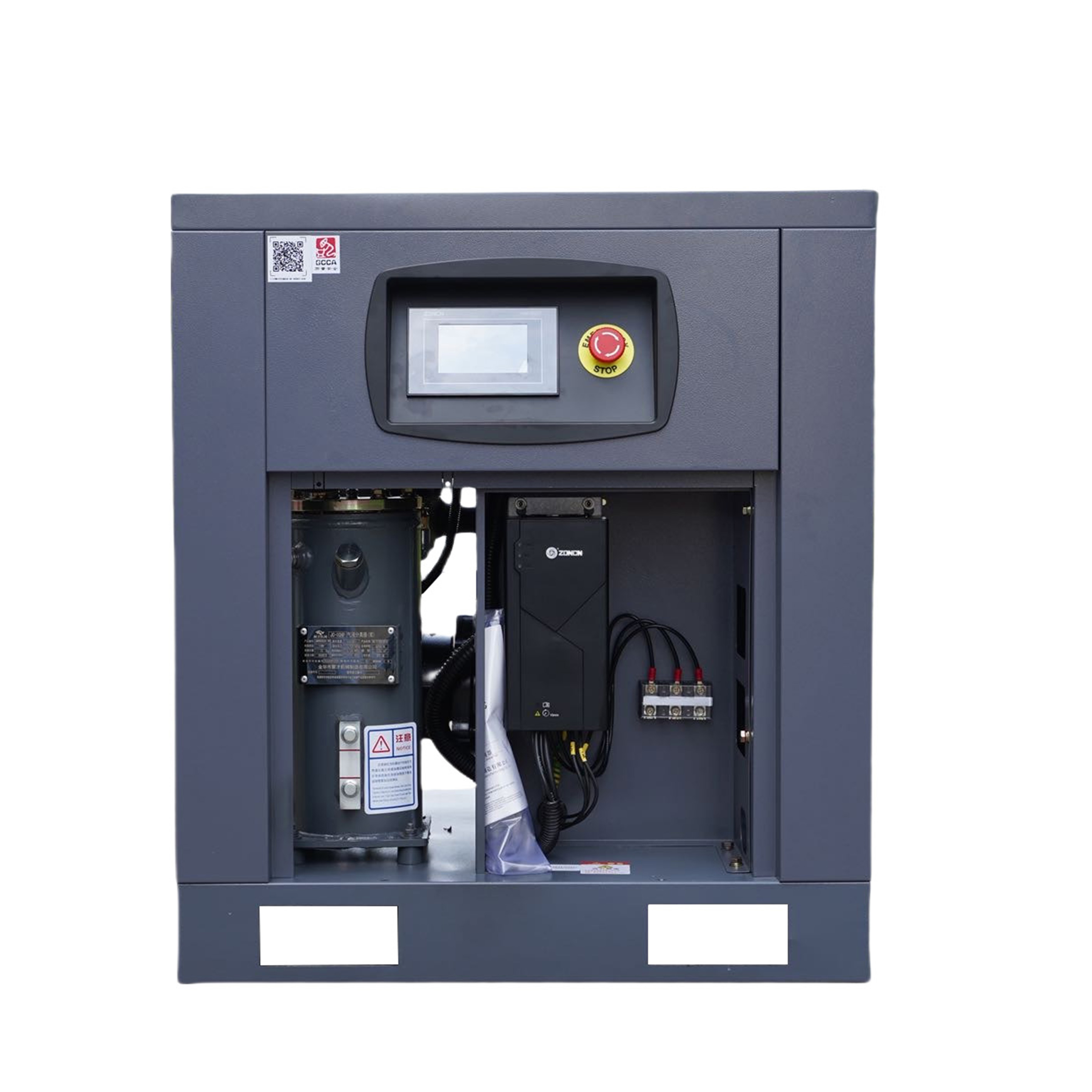
A complete variable frequency air compressor unit mainly consists of two parts:
1. Core Unit: The Source of Power
The core unit is the "heart" of the air compressor, consisting of a pair of precisely meshing male and female rotors. When they rotate at high speed, they directly compress the air. To ensure its long-term stable operation, the core unit also includes:
High-strength bearings: Supporting the rotors to achieve smooth, low-vibration rotation.
High-efficiency shaft seals: Preventing leakage of compressed air and lubricating oil, ensuring the purity of the output air source.
Balancing pistons: Used to counteract the axial force generated by the rotors during high-speed operation, protecting the precision of the core unit.
2. Key Auxiliary Units: Collaborative Support
The auxiliary system works around the core unit, together forming a reliable compressed air source.
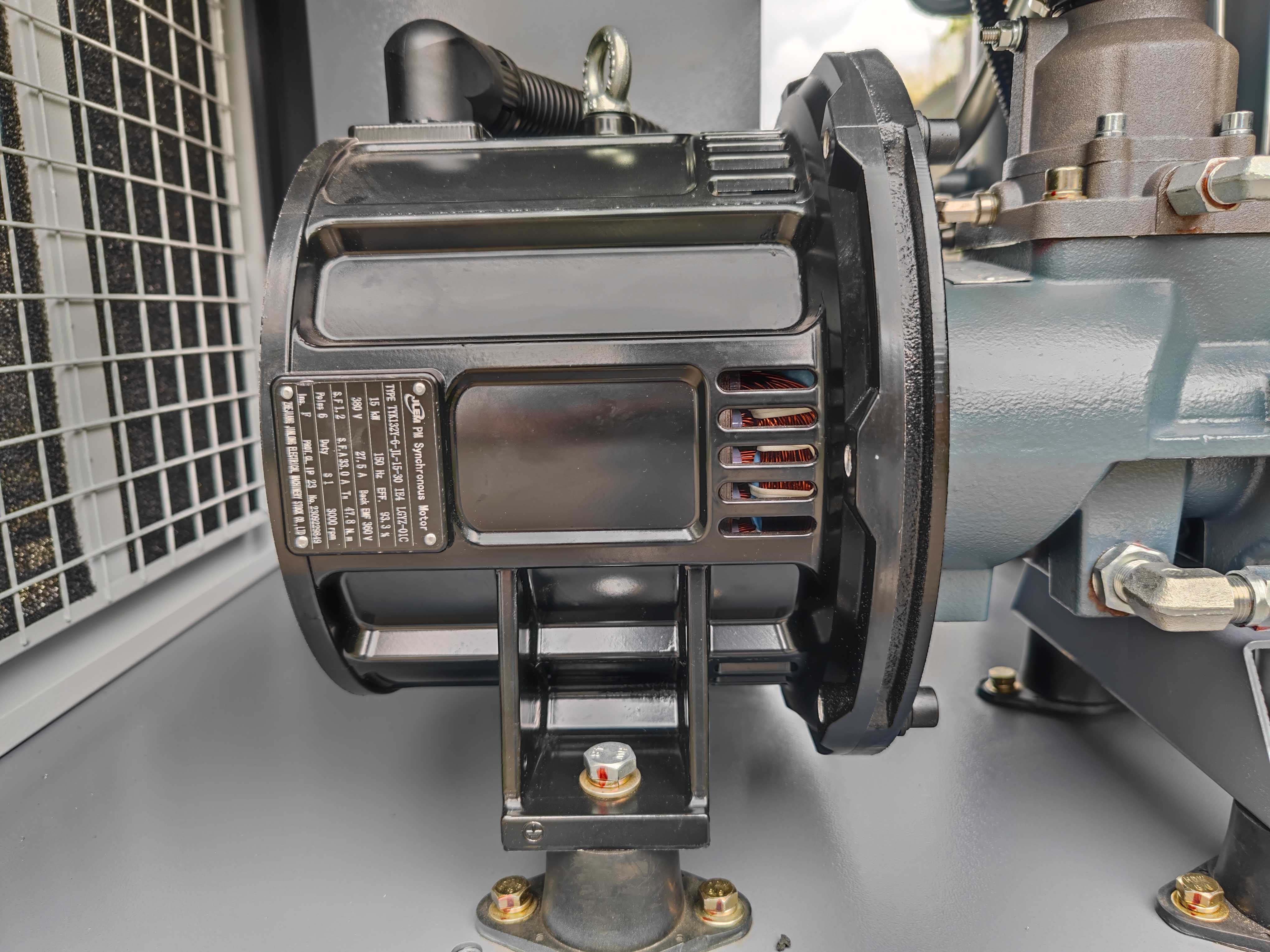
Drive Motor: Provides the initial power for the entire compression process.
Oil-Gas Separator: The core purification component, responsible for efficiently separating the lubricating oil mixed in the compressed air, ensuring the cleanliness of the output air.
Cooling System (Air-cooled/Water-cooled): Responsible for controlling the high temperatures generated during compression, effectively cooling the compressed air and lubricating oil, ensuring long-term operation of the equipment at safe temperatures.
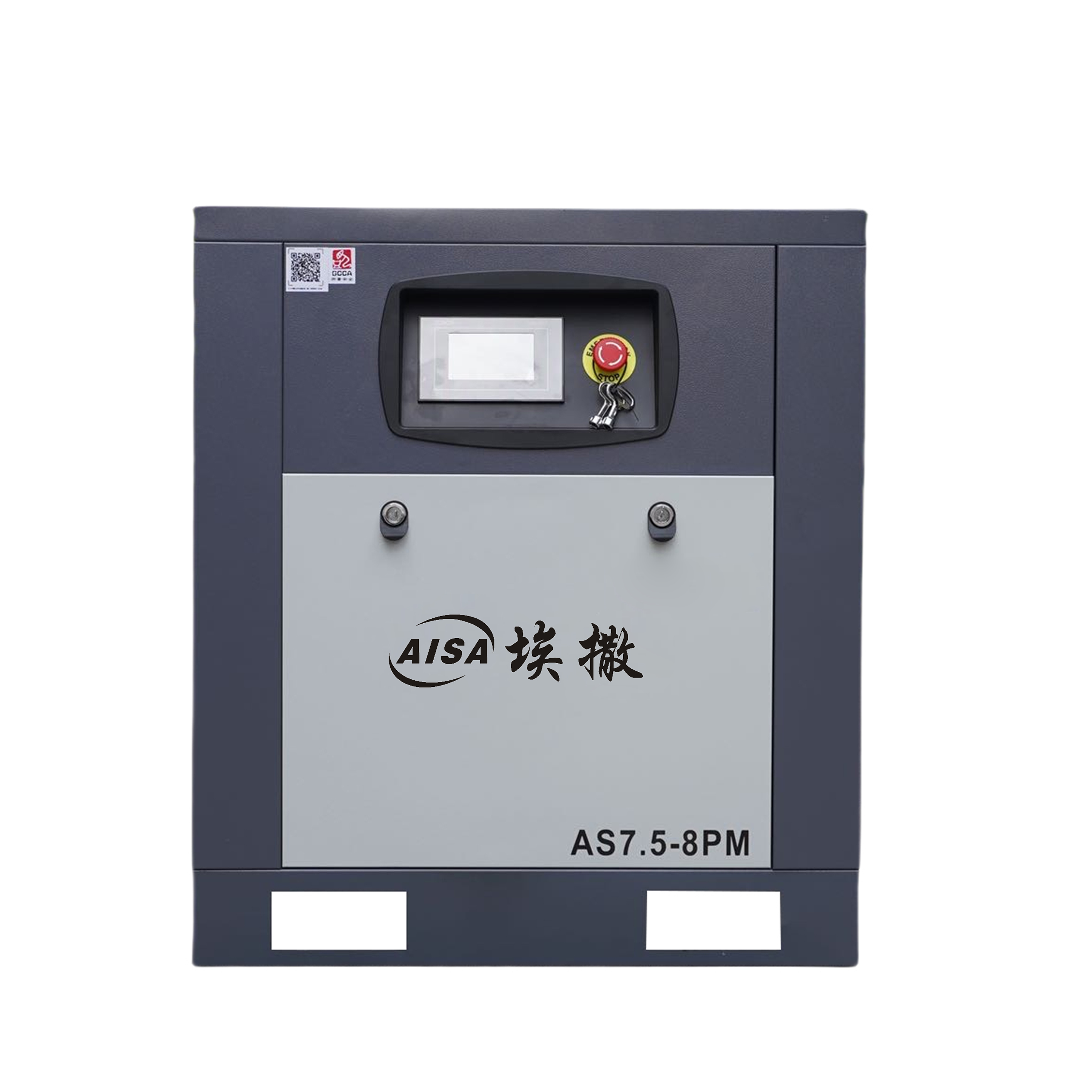
Intelligent Control System: The "brain" of the air compressor, monitoring and adjusting operating parameters in real time, realizing automatic start/stop, fault alarms, and energy-saving control.
II. The Core Role of Screw Air Compressors in Factories
In short, the core task of an inverter screw air compressor is to produce stable, clean, and high-pressure compressed air, providing a power source for various equipment and processes throughout the factory. Its main applications include:
Automation Instrument Drive: Provides control air for pneumatic valves, pressure, and flow sensors in the production line.
Process Control: Drives the actuators of large equipment (such as boiler dampers).
Pneumatic Material Conveying: Efficiently and in a closed system transports powdery materials such as fly ash and cement.
Equipment and Pipeline Purging: Regularly remove accumulated ash and debris from boiler heating surfaces, filters, and pipes.
Maintenance and Manufacturing Tool Power: Provides power for pneumatic wrenches, sandblasting equipment, grinders, etc., and is used for drying and cleaning equipment.
III. Detailed Explanation of Working Principle in Four Steps
Its continuous and stable compression process can be clearly understood through the following four steps:
Step 1: Air Intake
The motor drives the male and female rotors to begin rotating. As the gap between the rotor teeth turns towards the air inlet, the volume gradually increases, and outside air is naturally drawn in under the pressure difference.
Step 2: Sealing and Compression
As the rotors continue to rotate, the air inlet closes, and the volume between the teeth forms a closed compression chamber. The rotors mesh with each other, causing this volume to continuously decrease, thereby compressing the gas inside the chamber and continuously increasing the pressure.
Step 3: Cooling and Sealing
During compression, lubricating oil is precisely sprayed into the compression chamber. It primarily serves three functions:
1. Sealing the minute gaps between the rotors to reduce internal leakage;
2. Cooling and absorbing the enormous heat generated during compression;
3. Lubricating the rotor bearings to ensure stable operation of the main unit.
Step 4: Expelling Compressed Gas
When the rotor's meshing surface rotates to connect with the exhaust port of the casing, the compressed oil-gas mixture, having reached the target pressure, is pushed towards the exhaust system. Subsequently, the oil-gas mixture enters the oil-gas separator, where the lubricating oil is separated and recycled, while the clean compressed air is delivered to the air-consuming end.

